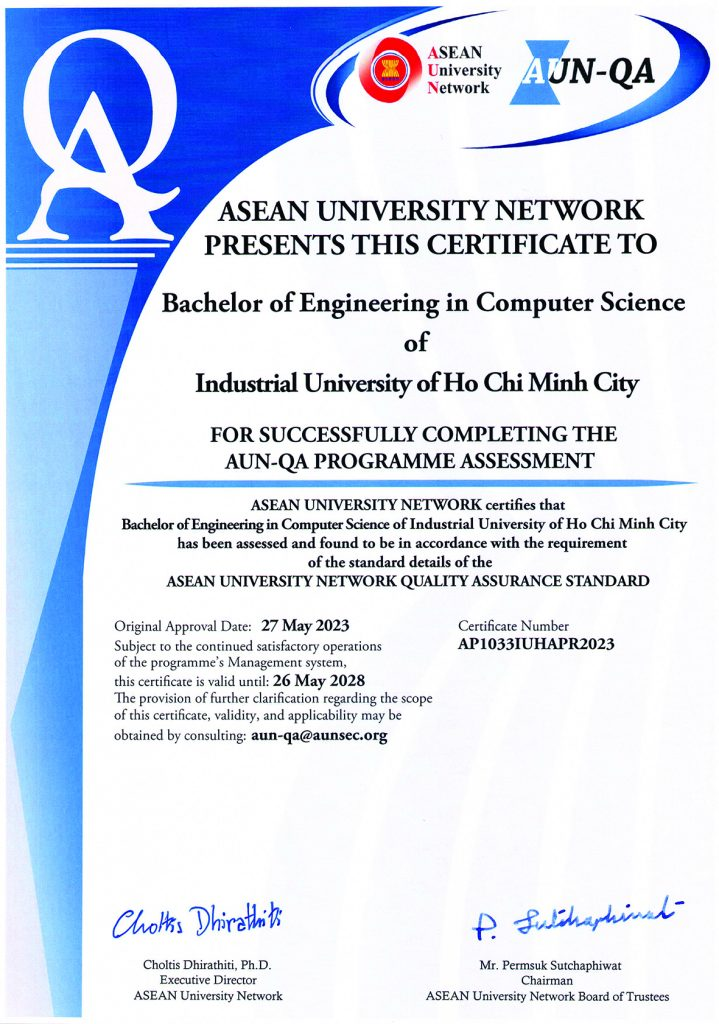
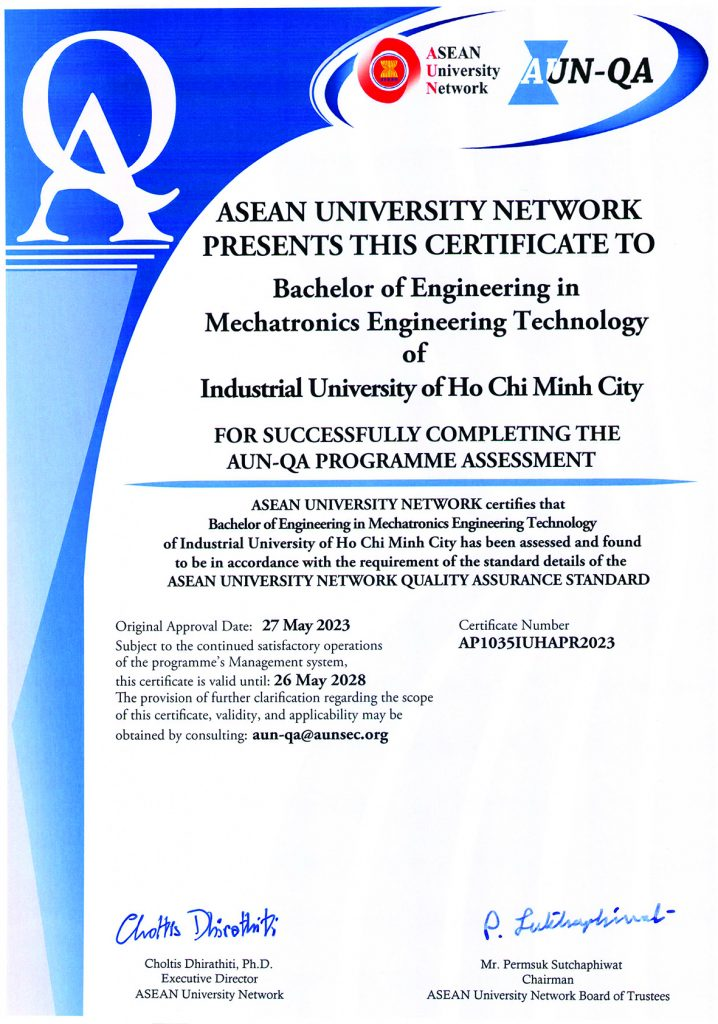
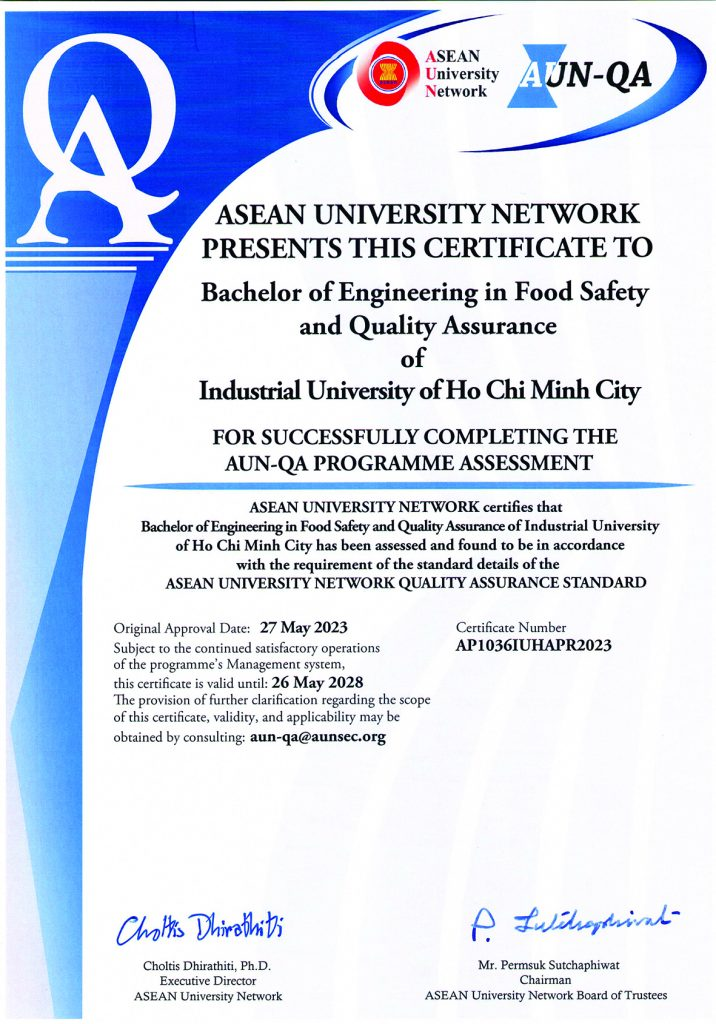
In April 2023, the Ho Chi Minh City University of Industry welcomed a delegation of experts from the ASEAN University Network (AUN) to assess the training programmes for the following disciplines: Control and Automation Engineering Technology (Faculty of Electrical Engineering Technology); Mechatronics Engineering Technology (Faculty of Mechanical Engineering); Computer Science (Faculty of Information Technology); and Quality Assurance and Food Safety (Institute of Biotechnology and Food Technology) according to the AUN-QA standards.
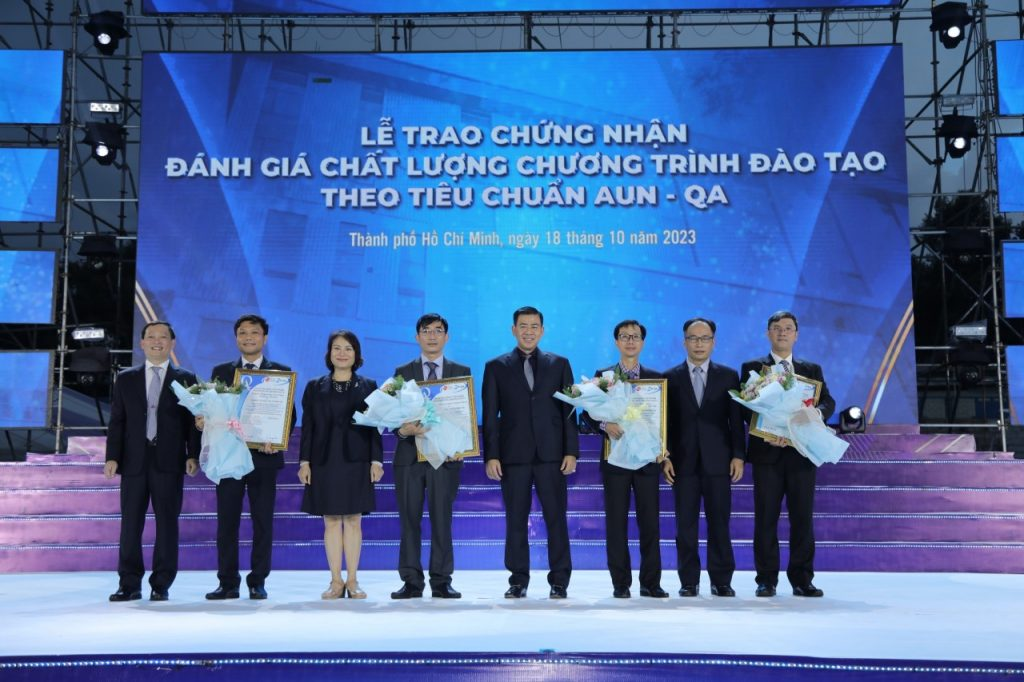
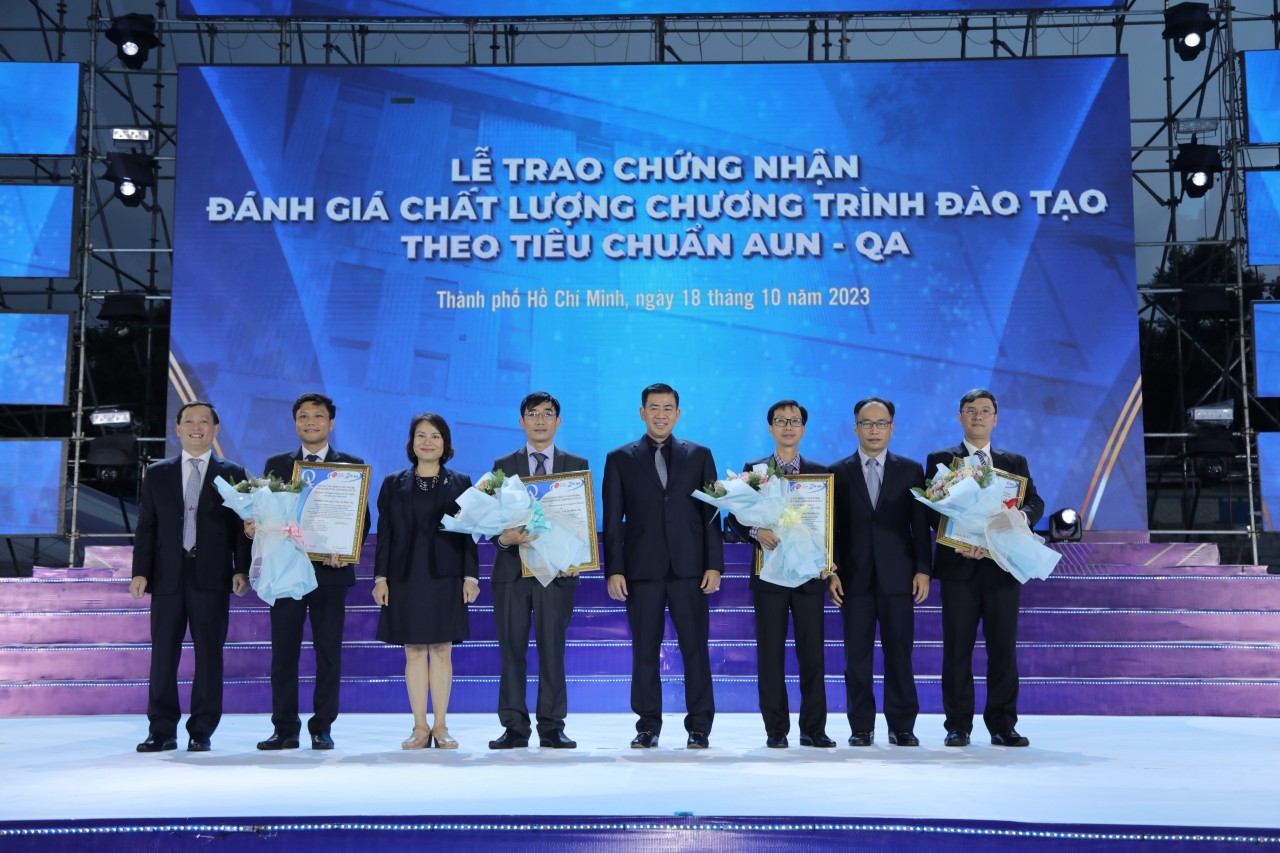
The leaders of 04 programs receive AUN-QA certification
After the evaluation process and the announcement of results, AUN officially awarded certification recognizing the four programmes of the university as meeting AUN-QA quality standards. This result is a significant affirmation of the quality of training, paving the way for expanding training cooperation and mutual credit acceptance between Industrial University of Ho Chi Minh City and reputable universities in the ASEAN region.
By May 2023, Industrial University of Ho Chi Minh City had achieved AUN-QA accreditation for 16 of its programmes.

IUH has been steadfast in upholding a quality culture within and beyond the institution, complying with regional and international accreditation benchmarks to protect the rights of learners and recruiters.
Introduction to the AUN-QA Quality Benchmarks Framework
The ASEAN University Network (AUN), a network of premier Southeast Asian universities, was founded in November 1995 as a result of an initiative by the ASEAN Ministers of Education Council, with initial members nominated by the Ministers of Education of each member country.
Since its inception, the AUN has prioritized quality education as a key objective to state the development of higher education in Southeast Asia, fostering mutual recognition and mobility among universities both within and outside the AUN network. To achieve this goal, the AUN has initiated a quality assurance assessment of higher education institutions in the region based on the common AUN-QA quality assurance standards, which were implemented in 2004 (AUN-QA stands for ASEAN University Network – Quality Assurance).
AUN-QA is a set of stringent quality standards with specific and clear criteria that focus on evaluating the conditions to ensure the quality of entire programmes, rather than relying solely on the characteristics of individual disciplines.
The AUN standards comprehensively evaluate programmes from multiple perspectives, including expected learning outcomes, curriculum framework, faculty, facilities, quality assurance, and the connections between the institution, students, and industries, …
The AUN has acknowledged the critical importance of quality and the necessity of developing a comprehensive quality assurance (QA) system among member institutions. Consequently, AUN-QA was established and has since developed and released various versions of quality assessment standards for both the programme and institutional levels. based on an empirical approach using proven quality assurance exemplars that are proved, evaluated, improved, and shared. The evolution of AUN-QA programme standards is depicted in the following figure:
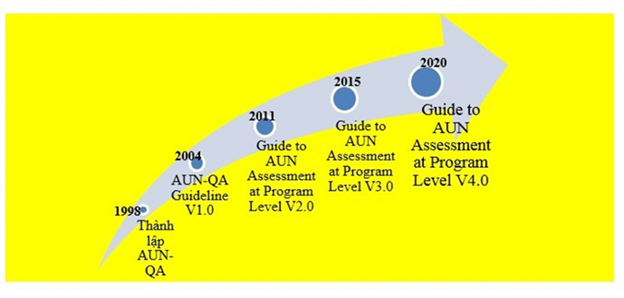
The development process of the AUN-QA programme-level standards:
The AUN-QA V4.0 standards were formulated based on a review by the AUN Expert Council, incorporating feedback from various stakeholders after each external evaluation, including assessors, administrators, and participating faculty. The version comprises eight standards and 53 criteria:
- Standard 1: Expected Learning Outcomes (5 criteria).
- Standard 2: Program Structure and Content (7 criteria).
- Standard 3: Teaching and Learning Methods (6 criteria).
- Standard 4: Student Assessment (7 criteria).
- Standard 5: Faculty (8 criteria).
- Standard 6: Student Support Services (6 criteria).
- Standard 7: Facilities (9 criteria).
- Standard 8: Program Outcomes (5 criteria).
Each criterion is assessed on a 7-level scale:
- Level 1: Non-existent (no documentation, plans, or supporting evidence).
- Level 2: Planning stage.
- Level 3: Documentation exists but no clear evidence or evidence is unclear.
- Level 4: Clear documentation and supporting evidence.
- Level 5: Clear documents clearl demonstrating the effectiveness in the area under review.
- Level 6: Good quality.
- Level 7: Excellent.