
Industrial University of Ho Chi Minh City (IUH) promotes the protection of employees’ legitimate rights and interests by maintaining representative organisations, participatory governance structures and established channels for institutional dialogue. These arrangements support the involvement of academic staff, administrative personnel and other employees in discussions affecting their professional responsibilities, working conditions, remuneration and institutional development.
In 2025, IUH continued strengthening employee participation through the Conference of Public Employees and Workers, Trade Union representation and institutional mechanisms for consultation and feedback. These practices are supported by the University’s established governance structures, including the University Council, the Science and Training Council, and administrative procedures for receiving and addressing concerns.
Together, these mechanisms contribute to a working environment that values collective participation, transparency, professional respect and responsible university governance.
Activity 1. Promoting Labour Rights through the 2025 Conference of Public Employees and Workers
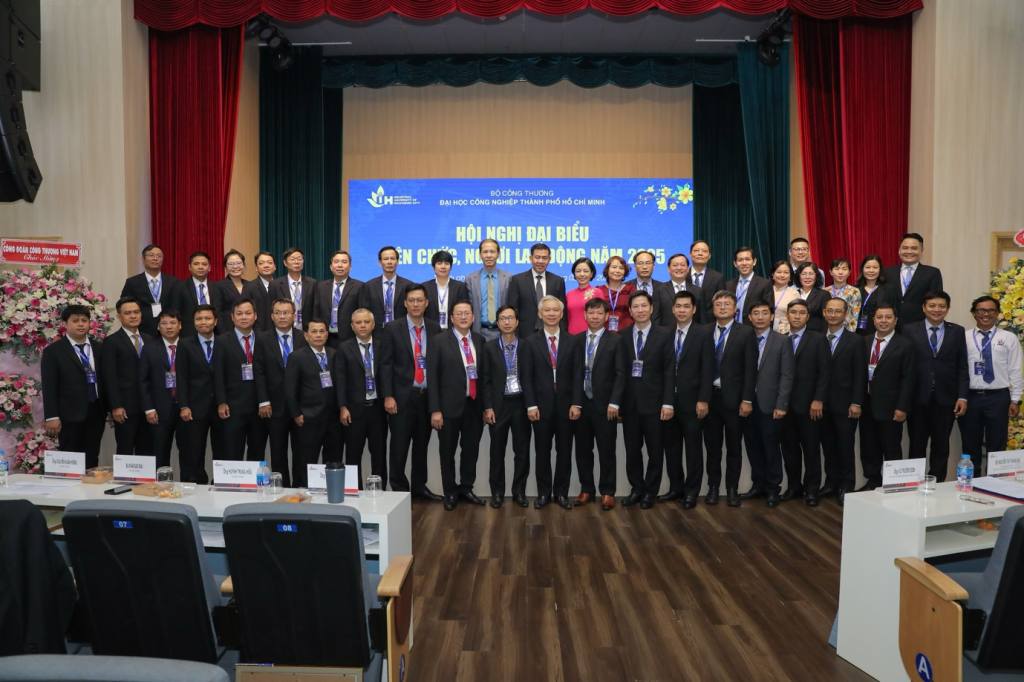
On 7 February 2025, IUH organised its annual Conference of Public Employees and Workers, bringing together more than 249 delegates representing academic staff, administrative personnel and employees across the University.
The conference provided a formal mechanism for employee representation, institutional dialogue and collective participation in discussions about university management and employment-related policies.
Before the university-wide conference, individual units held employee meetings between 30 December 2024 and 6 January 2025 to review their activities, gather opinions and select representatives.
During the conference, delegates reviewed the implementation of the previous year’s resolutions and discussed institutional priorities for 2025. Rector Dr Phan Hong Hai also presented proposed amendments to the University’s Internal Expenditure Regulations, providing information relevant to financial management, remuneration arrangements and employee welfare.
The event involved university leadership, representatives of the Vietnam Industry and Trade Trade Union, the IUH Trade Union and employee delegates.
For staff members, this representative forum created opportunities to communicate workplace concerns, contribute to discussions and better understand policies affecting their professional interests.
For the University, the consultation process supported transparent decision-making and strengthened communication between management and employees.
Through collective consultation and representative participation, IUH reinforces employees’ voices in institutional governance and contributes to a fair and accountable working environment.
Source:
Activity 2. Recognising Employee Representation and Protecting Labour Rights through the IUH Trade Union
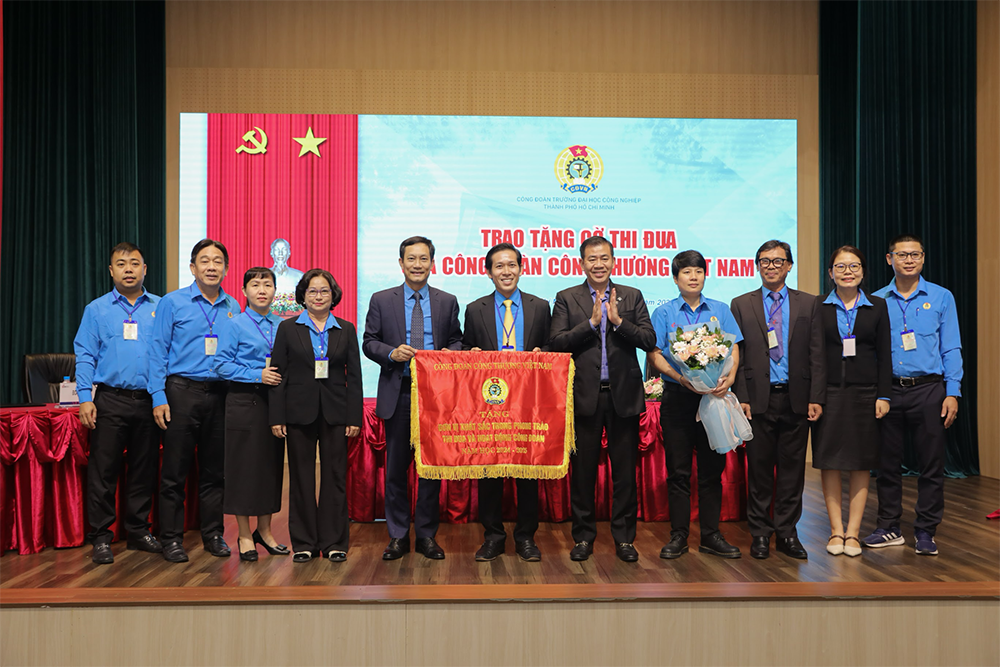
IUH formally recognises its Trade Union as an institutional organisation representing academic staff, administrative personnel and other employees.
According to its published functions and responsibilities, the IUH Trade Union cooperates with university leadership to protect employees’ legitimate rights and interests, support their material and mental well-being, and participate in monitoring institutional activities.
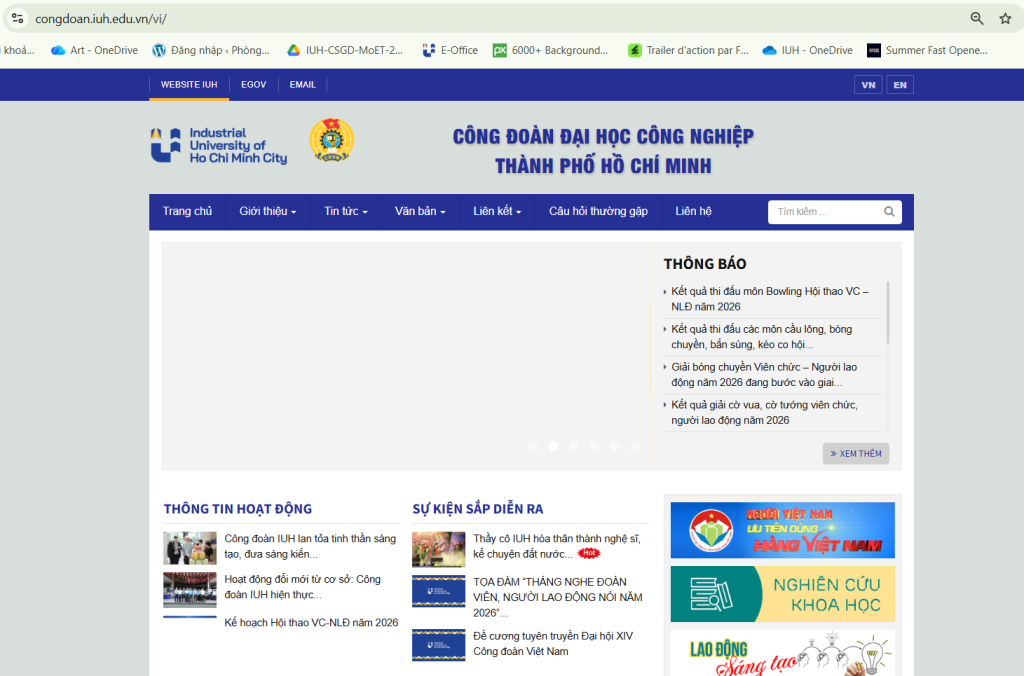
The Trade Union’s publicly available profile reports 1,489 members, including 603 women, organised into 49 union groups across the University’s organisational network.
This structure provides representative channels through which employees can communicate concerns, participate in collective activities and receive support relating to their working lives.
The Trade Union also participates in employee welfare initiatives, workplace safety activities, professional development encouragement and institutional consultation.
In November 2025, IUH held its 17th Trade Union Congress for the 2025–2030 term, with 105 delegates participating. The Congress elected a nine-member Executive Committee, strengthening the continuity of employee representation.
For employees, an established Trade Union creates opportunities to express collective concerns and seek institutional attention to legitimate workplace interests.
For female employees, participation in union structures and welfare initiatives supports greater involvement in institutional activities and representative processes.
Through sustained recognition of Trade Union representation, IUH promotes collective participation, employee welfare and constructive communication concerning working conditions and employment rights.
Sources:
https://congdoan.iuh.edu.vn/gioi-thieu-chung/
Activity 3. Strengthening Participatory University Governance through the University Council
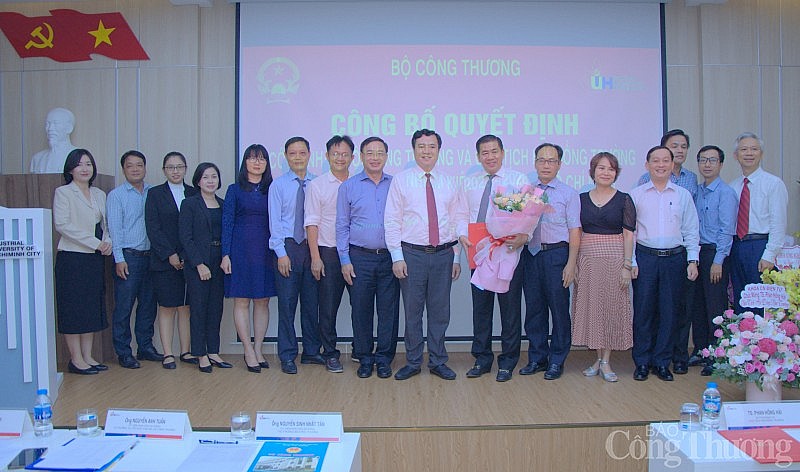
On 29 May 2023, IUH announced the recognition of its University Council for the 2023–2028 term, comprising 15 members, in accordance with Decision No. 1176/QD-BCT issued by the Ministry of Industry and Trade.
The University Council serves as an institutional governance body that supports strategic direction, management oversight and the consideration of matters affecting the University’s development.
Its establishment provides a formal framework through which institutional stakeholders can participate in governance and the consideration of important university policies.
For academic and administrative employees, representative governance arrangements help create opportunities for their professional interests and institutional perspectives to be considered in decision-making.
The Council’s functions are relevant to the wider management environment in which employment policies, staff development priorities and organisational responsibilities are established and reviewed.
For IUH, collective governance provides an institutional structure supporting transparency, accountability and coordinated decision-making.
The Council also contributes to strengthening confidence that university development is considered through recognised governance procedures rather than solely through individual administrative decisions.
Although the University Council is distinct from a Trade Union and does not itself constitute a collective bargaining mechanism, its establishment supports a broader institutional environment of participation and accountability.
This governance framework provides supplementary evidence of IUH’s commitment to representative participation and responsible management, contributing to sustainable institutional development.
Institutional governance framework established in 2023.
Source:
Activity 4. Promoting Academic Staff Participation through the Science and Training Council
IUH established a formal academic consultation mechanism through its Regulations on the Organisation and Operation of the Science and Training Council, issued under Decision No. 347/QD-DHCN dated 13 May 2020.
The regulations provide an institutional framework for collective discussion and professional consultation concerning education, training, scientific research and academic development.
Through the Council, participating academics and researchers can contribute professional perspectives, discuss institutional academic priorities and provide recommendations on matters within the Council’s responsibilities.
This mechanism creates opportunities for academic staff to take part in deliberative processes that influence the University’s teaching and research environment.
For lecturers and researchers, participation in academic consultation strengthens their professional voice and offers opportunities to contribute expertise beyond individual teaching or research duties.
For university management, advice from academic specialists supports better-informed consideration of training quality, research priorities and professional development needs.
The Council’s collective approach also encourages professional exchange and strengthens the relationship between institutional decision-making and academic expertise.
By maintaining a formal mechanism for academic consultation, IUH promotes participation, professional respect and transparency within its governance arrangements.
These activities complement employee representation and labour-related dialogue, contributing to an institutional environment in which academic staff can engage constructively in the University’s development.
Source:
Activity 5. Supporting Employees’ Rights through Institutional Feedback and Guidance Mechanisms
IUH maintains institutional arrangements for communicating regulations, receiving feedback and guiding employees in exercising their rights under applicable rules.
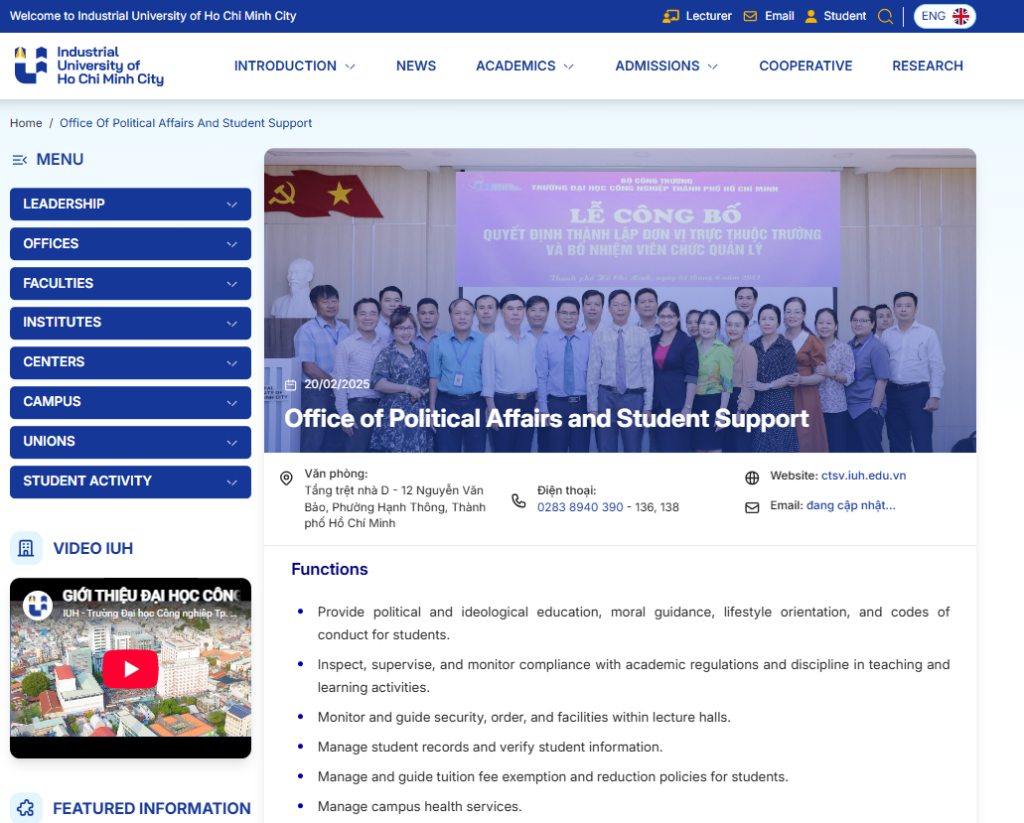
According to the functions and responsibilities of the Department of Political Affairs and Student Support, published on 20 February 2025, the Department serves as a contact point for public employees and workers who require guidance in submitting concerns in accordance with Vietnamese law.
The Department also disseminates institutional codes of conduct, relevant legal requirements and information concerning employees’ professional responsibilities.
Its responsibilities include monitoring compliance, gathering information about institutional concerns and providing recommendations to university management where appropriate.
For academic and administrative staff, an identifiable contact point can make it easier to seek guidance, communicate workplace concerns and understand the procedures available for raising issues.
The dissemination of legal and institutional information also supports awareness of employees’ rights, responsibilities and expected professional conduct.
For the University, feedback and guidance mechanisms provide opportunities to identify emerging concerns, strengthen communication and improve responsiveness.
By combining policy communication with employee guidance and institutional monitoring, IUH supports a more transparent and accountable workplace in which employees have recognised channels for seeking assistance and expressing legitimate concerns.
Source:
https://iuh.edu.vn/vi/phong-cong-tac-chinh-tri-va-ho-tro-sinh-vien.html
Activity 6. Strengthening Institutional Accountability through Procedures for Handling Complaints, Petitions and Feedback
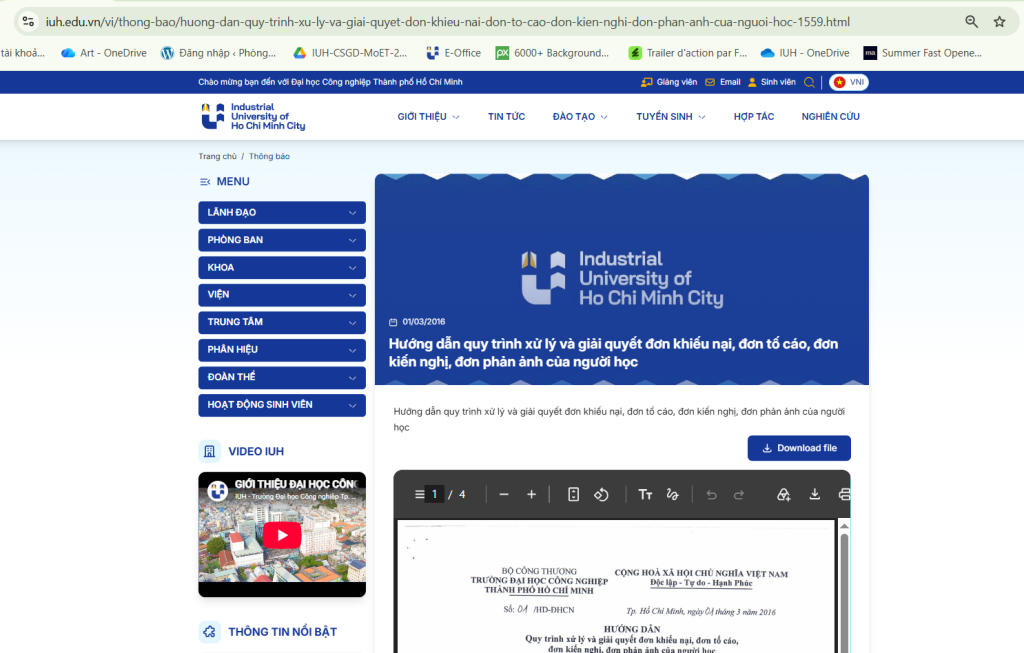
IUH has publicly issued procedures for receiving and resolving complaints, denunciations, petitions and feedback, demonstrating the University’s use of documented administrative processes to address institutional concerns.
The published guidance establishes procedures through which learners may submit complaints and requests for consideration by the University. It demonstrates the broader institutional importance placed on transparent communication, formal submission processes and accountable handling of concerns.
Such procedures provide a reference for understanding how university administrative processes can distinguish different types of concerns and facilitate their review by responsible units.
For members of the university community, clearly communicated procedures help improve understanding of available reporting channels and encourage the use of formal mechanisms when raising issues.
For university management, documented procedures support consistent administration, the identification of matters requiring attention and the communication of institutional responsibilities.
In the context of labour rights, the existence of procedural guidance contributes to the wider institutional culture of accountability and procedural fairness.
Alongside the University’s Trade Union, employee consultation arrangements and administrative feedback mechanisms, such guidance illustrates IUH’s broader commitment to transparent governance.
By maintaining accessible procedures for addressing institutional concerns, IUH reinforces the importance of participation, responsible administration and respect for the rights of individuals within the university community.
Source:
Results and Impact
In 2025, IUH strengthened employee representation and collective consultation through its institutional governance and Trade Union mechanisms. The Conference of Public Employees and Workers on 7 February brought together more than 249 delegates and included discussions on the University’s Internal Expenditure Regulations and the election of a three-member People’s Inspection Board for the 2025–2027 term. The 17th Trade Union Congress on 12 November convened 105 delegates and elected a nine-member Executive Committee for 2025–2030. IUH’s published Trade Union profile records 1,489 members, including 603 women, organised into 49 union groups. These activities were supported by established governance arrangements, including the University Council, Science and Training Council, employee feedback guidance and publicly documented administrative procedures for handling concerns.
Collectively, these arrangements strengthen opportunities for employees to participate in university affairs and communicate concerns about their working conditions and professional interests. Trade Union representation provides a recognised organisational channel for protecting legitimate employment interests, while employee conferences enable consultation on institutional policies and remuneration-related matters. Academic governance structures encourage the participation of lecturers and researchers in professional decision-making, and feedback mechanisms support access to guidance and institutional responsiveness. Through representative participation, consultation and procedural transparency, IUH fosters a working environment that values employees’ voices, strengthens accountability and supports fair and sustainable employment under SDG 8 – Decent Work and Economic Growth.
IUH tăng cường bảo vệ quyền lao động thông qua tổ chức Công đoàn, cơ chế đại diện tập thể và quản trị đại học dân chủ
Trường Đại học Công nghiệp Thành phố Hồ Chí Minh (IUH) chú trọng bảo vệ quyền và lợi ích hợp pháp, chính đáng của giảng viên, viên chức và người lao động thông qua hoạt động của tổ chức Công đoàn, cơ chế đối thoại tập thể và hệ thống quản trị có sự tham gia của các bên liên quan. Những cơ chế này tạo điều kiện để người lao động đóng góp ý kiến, bày tỏ nguyện vọng và tham gia trao đổi về các chính sách liên quan đến điều kiện làm việc, thu nhập, phúc lợi và phát triển nghề nghiệp.
Trong năm 2025, IUH tiếp tục phát huy các cơ chế đại diện thông qua Hội nghị Viên chức, Người lao động, hoạt động Công đoàn và những quy định quản trị đã được Nhà trường ban hành. Các hoạt động này góp phần tăng cường quyền tham gia, tính minh bạch, trách nhiệm giải trình và sự gắn kết giữa lãnh đạo Nhà trường với đội ngũ nhân sự.
Hoạt động 1. Thúc đẩy quyền lao động thông qua Hội nghị Viên chức, Người lao động năm 2025
Ngày 07/02/2025, IUH tổ chức Hội nghị đại biểu Viên chức, Người lao động năm 2025 với sự tham dự của hơn 249 đại biểu đại diện cho giảng viên, viên chức và người lao động toàn trường.
Hội nghị là diễn đàn chính thức để thực hiện quyền đại diện, tham gia đối thoại và đóng góp ý kiến đối với hoạt động quản lý cùng những chính sách liên quan đến quyền lợi của người lao động.
Trước đó, từ ngày 30/12/2024 đến ngày 06/01/2025, các đơn vị trực thuộc tổ chức hội nghị cấp cơ sở nhằm tổng kết hoạt động, tiếp nhận ý kiến và lựa chọn đại biểu tham dự Hội nghị cấp trường.
Tại Hội nghị, các đại biểu xem xét kết quả thực hiện Nghị quyết năm 2024, thảo luận những nhiệm vụ trọng tâm năm 2025. Đặc biệt, TS. Phan Hồng Hải, Bí thư Đảng ủy, Hiệu trưởng Nhà trường, trình bày các nội dung điều chỉnh trong dự thảo Quy chế chi tiêu nội bộ năm 2025, liên quan đến cơ chế quản lý tài chính, thu nhập và phúc lợi người lao động.
Sự tham gia của lãnh đạo Nhà trường, đại diện Công đoàn Công Thương Việt Nam, Công đoàn IUH và đại biểu các đơn vị tạo điều kiện trao đổi thông tin trong một diễn đàn tập thể.
Đối với người lao động, hoạt động giúp mở rộng cơ hội tiếp cận thông tin, phản ánh nguyện vọng và góp ý vào các chính sách ảnh hưởng đến quyền lợi nghề nghiệp.
Đối với Nhà trường, cơ chế tham vấn hỗ trợ nâng cao trách nhiệm giải trình và củng cố sự đồng thuận trong quá trình thực hiện các quyết định quản lý.
Thông qua đối thoại và tham gia đại diện, IUH góp phần xây dựng môi trường làm việc công bằng, minh bạch và tôn trọng tiếng nói của người lao động.
Nguồn minh chứng:
Hoạt động 2. Công nhận tổ chức Công đoàn và bảo vệ quyền, lợi ích hợp pháp của người lao động
IUH công nhận Công đoàn Trường là tổ chức đại diện cho đội ngũ giảng viên, viên chức, nhân viên và người lao động.
Theo chức năng, nhiệm vụ được công bố, Công đoàn IUH phối hợp với Ban Giám hiệu chăm lo đời sống, bảo vệ quyền và lợi ích hợp pháp, chính đáng của người lao động; đồng thời tham gia thanh tra, kiểm tra, giám sát hoạt động của các đơn vị trong Nhà trường.
Thông tin trên website Công đoàn ghi nhận tổ chức có 1.489 đoàn viên, trong đó 603 đoàn viên nữ, sinh hoạt tại 49 tổ công đoàn thuộc mạng lưới các đơn vị.
Cơ cấu này hình thành kênh đại diện để người lao động trao đổi những vấn đề liên quan đến việc làm, thu nhập, phúc lợi và điều kiện lao động.
Bên cạnh chức năng đại diện, Công đoàn còn tham gia các hoạt động chăm lo đời sống, bảo đảm an toàn lao động, khuyến khích phát triển chuyên môn và tăng cường sự tham gia của người lao động vào hoạt động tập thể.
Ngày 12/11/2025, IUH tổ chức Đại hội Công đoàn Trường lần thứ XVII, nhiệm kỳ 2025–2030, với 105 đại biểu tham dự và bầu Ban Chấp hành gồm 9 thành viên.
Đối với viên chức và người lao động, tổ chức Công đoàn tạo điều kiện tập hợp ý kiến, đại diện cho những quyền lợi chung và tham gia đối thoại với lãnh đạo Nhà trường.
Đối với lao động nữ, việc tham gia tổ chức đại diện và các hoạt động chăm lo góp phần thúc đẩy cơ hội đóng góp ý kiến, phát triển nghề nghiệp và được hỗ trợ về điều kiện làm việc.
Thông qua duy trì và củng cố tổ chức Công đoàn, IUH thúc đẩy quyền đại diện tập thể, tăng cường phúc lợi và xây dựng quan hệ lao động hài hòa.
Nguồn minh chứng:
https://congdoan.iuh.edu.vn/gioi-thieu-chung/
Hoạt động 3. Tăng cường quản trị đại học có sự tham gia thông qua Hội đồng trường
Ngày 29/5/2023, IUH công bố quyết định công nhận Hội đồng trường nhiệm kỳ 2023–2028, gồm 15 thành viên, theo Quyết định số 1176/QĐ-BCT của Bộ Công Thương.
Hội đồng trường là một thiết chế trong cơ cấu quản trị đại học, thực hiện các chức năng liên quan đến định hướng phát triển, giám sát quản lý và xem xét những vấn đề quan trọng trong hoạt động của Nhà trường.
Việc thành lập Hội đồng trường tạo cơ sở tổ chức để các bên liên quan tham gia vào cơ chế quản trị và xem xét những định hướng, chính sách phát triển đại học theo quy định.
Đối với giảng viên, viên chức và người lao động, cơ chế quản trị có sự tham gia góp phần tạo điều kiện để các vấn đề liên quan đến môi trường làm việc, phát triển đội ngũ và hoạt động chuyên môn được xem xét trong tổng thể quản trị Nhà trường.
Đối với IUH, Hội đồng trường hỗ trợ tăng cường minh bạch, trách nhiệm giải trình và tính nhất quán trong quá trình xây dựng, thực hiện các định hướng phát triển.
Hoạt động của Hội đồng trường cũng tạo nền tảng để việc quản trị được thực hiện thông qua cơ cấu tổ chức và quy trình chính thức, góp phần nâng cao sự tin tưởng của các bên liên quan.
Mặc dù Hội đồng trường không thay thế chức năng đại diện của Công đoàn hoặc cơ chế thương lượng tập thể, đây là thiết chế quản trị bổ trợ cho môi trường có sự tham gia và trách nhiệm giải trình.
Thông qua duy trì cơ chế quản trị đại học, IUH củng cố nền tảng tổ chức phục vụ phát triển đội ngũ, bảo vệ lợi ích chính đáng của các bên liên quan và phát triển bền vững.
Nguồn minh chứng:
Hoạt động 4. Thúc đẩy quyền tham gia của giảng viên thông qua Hội đồng Khoa học và Đào tạo
IUH ban hành Quy chế hoạt động của Hội đồng Khoa học và Đào tạo theo Quyết định số 347/QĐ-ĐHCN ngày 13/5/2020, tạo cơ sở tổ chức hoạt động tham vấn và trao đổi chuyên môn trong quản trị học thuật.
Quy chế quy định cơ chế để các thành viên Hội đồng tham gia trao đổi, thảo luận và đóng góp ý kiến đối với các vấn đề thuộc lĩnh vực đào tạo, nghiên cứu khoa học và phát triển học thuật.
Thông qua Hội đồng, các nhà khoa học và giảng viên tham gia có cơ hội trình bày quan điểm chuyên môn, đề xuất giải pháp, đưa ra khuyến nghị và tham gia xem xét những vấn đề thuộc phạm vi hoạt động của Hội đồng.
Đối với giảng viên, nhà nghiên cứu, hoạt động này tạo điều kiện phát huy tiếng nói học thuật và đóng góp năng lực chuyên môn ngoài nhiệm vụ giảng dạy, nghiên cứu cá nhân.
Đối với Nhà trường, việc tiếp nhận ý kiến từ các chuyên gia giúp tăng cường cơ sở khoa học trong quá trình xem xét những định hướng đào tạo, nghiên cứu và phát triển đội ngũ.
Cơ chế thảo luận tập thể còn tạo môi trường trao đổi kiến thức, khuyến khích tinh thần hợp tác và tôn trọng những quan điểm chuyên môn khác nhau.
Thông qua duy trì hoạt động tham vấn học thuật, IUH thúc đẩy sự tham gia của giảng viên trong quản trị, tăng cường tính minh bạch và phát huy trách nhiệm nghề nghiệp của đội ngũ.
Đây là cơ chế bổ trợ cho những hoạt động đại diện, đối thoại và bảo vệ quyền lợi người lao động được thực hiện thông qua tổ chức Công đoàn và các diễn đàn tập thể của Nhà trường.
Nguồn minh chứng:
Hoạt động 5. Tăng cường tiếp nhận phản ánh và hướng dẫn thực hiện quyền của viên chức, người lao động
IUH duy trì các cơ chế phổ biến quy định, tiếp nhận phản ánh và hướng dẫn người lao động thực hiện những quyền, trách nhiệm theo quy định pháp luật và quy chế của Nhà trường.
Theo chức năng, nhiệm vụ công bố ngày 20/02/2025, Phòng Công tác chính trị và Hỗ trợ sinh viên là một trong những đầu mối tiếp viên chức, người lao động, hướng dẫn thực hiện quyền phản ánh theo quy định pháp luật.
Đơn vị đồng thời thực hiện nhiệm vụ tuyên truyền, phổ biến các quy tắc ứng xử, quy định pháp luật và thông tin liên quan đến trách nhiệm nghề nghiệp của đội ngũ nhân sự.
Các hoạt động còn bao gồm theo dõi việc chấp hành quy định, nắm bắt thông tin phản ánh và tham mưu cho lãnh đạo Nhà trường những vấn đề thuộc phạm vi chức năng.
Đối với giảng viên, viên chức và người lao động, việc có đầu mối hướng dẫn rõ ràng giúp thuận tiện hơn khi cần tìm hiểu quy định, phản ánh vấn đề hoặc đề nghị được giải đáp về những nội dung liên quan đến hoạt động công tác.
Việc phổ biến thông tin pháp luật và quy chế nội bộ cũng góp phần nâng cao nhận thức về quyền lợi, trách nhiệm và chuẩn mực ứng xử trong môi trường làm việc.
Đối với Nhà trường, cơ chế tiếp nhận và hướng dẫn phản ánh giúp tăng cường kết nối thông tin, nhận diện vấn đề phát sinh và hỗ trợ việc xem xét, xử lý theo thẩm quyền.
Thông qua kết hợp tuyên truyền chính sách, hướng dẫn người lao động và hoạt động giám sát, IUH củng cố môi trường làm việc minh bạch, có trách nhiệm và tôn trọng quyền phản ánh của đội ngũ nhân sự.
Nguồn minh chứng:
https://iuh.edu.vn/vi/phong-cong-tac-chinh-tri-va-ho-tro-sinh-vien.html
Hoạt động 6. Tăng cường trách nhiệm giải trình thông qua quy trình tiếp nhận và giải quyết khiếu nại, kiến nghị, phản ánh
IUH đã công khai hướng dẫn về quy trình xử lý, giải quyết đơn khiếu nại, tố cáo, kiến nghị và phản ánh, thể hiện việc tổ chức các thủ tục hành chính chính thức để tiếp nhận và xem xét những vấn đề phát sinh trong cộng đồng Nhà trường.
Tài liệu được công bố hướng dẫn việc tiếp nhận, xử lý các đơn do người học gửi đến Nhà trường. Đây là một ví dụ về việc xây dựng quy trình hành chính và phân định trách nhiệm trong giải quyết các yêu cầu, kiến nghị.
Việc quy định trình tự tiếp nhận và xử lý đơn góp phần làm rõ cách thức gửi thông tin, phân loại vấn đề và chuyển đến những đơn vị có thẩm quyền giải quyết.
Đối với người học, quy trình giúp tăng khả năng tiếp cận các kênh kiến nghị, tạo điều kiện phản ánh những vấn đề cần được xem xét thông qua thủ tục chính thức.
Đối với công tác quản trị, việc công khai hướng dẫn góp phần hỗ trợ xử lý thông tin có hệ thống, nâng cao tính minh bạch và trách nhiệm của các bộ phận liên quan.
Trong bối cảnh bảo vệ quyền lợi tại cơ sở giáo dục đại học, các quy trình hành chính được công bố thể hiện sự chú trọng đến nguyên tắc tiếp nhận, xem xét và giải quyết phản ánh.
Kết hợp với các kênh đại diện Công đoàn, diễn đàn đối thoại viên chức và cơ chế hướng dẫn phản ánh của người lao động, hoạt động này bổ trợ cho văn hóa quản trị có trách nhiệm của IUH.
Thông qua duy trì quy trình xử lý kiến nghị và phản ánh, Nhà trường thúc đẩy tính minh bạch trong quản lý, tôn trọng quyền tham gia và nâng cao chất lượng phục vụ các thành viên trong cộng đồng đại học.
Nguồn minh chứng:
Kết quả và tác động (Results and Impact)
Trong năm 2025, IUH tiếp tục duy trì và củng cố các cơ chế đại diện, tham vấn và giám sát nhằm bảo vệ quyền lợi người lao động. Ngày 07/02, Nhà trường tổ chức Hội nghị Viên chức, Người lao động với hơn 249 đại biểu, trong đó có nội dung thảo luận về Quy chế chi tiêu nội bộ và bầu Ban Thanh tra nhân dân nhiệm kỳ 2025–2027 gồm 3 thành viên. Ngày 12/11, Đại hội Công đoàn Trường lần thứ XVII được tổ chức với 105 đại biểu tham dự, bầu Ban Chấp hành nhiệm kỳ 2025–2030 gồm 9 thành viên. Thông tin công khai của Công đoàn ghi nhận 1.489 đoàn viên, trong đó có 603 nữ, sinh hoạt tại 49 tổ công đoàn. Những hoạt động này được hỗ trợ bởi các cơ chế quản trị đã được thiết lập như Hội đồng trường, Hội đồng Khoa học và Đào tạo, quy định tiếp nhận phản ánh và hệ thống thủ tục hành chính của Nhà trường.
Các cơ chế trên góp phần mở rộng cơ hội để người lao động tham gia vào hoạt động quản trị, trao đổi những vấn đề liên quan đến quyền lợi và điều kiện làm việc. Công đoàn tạo kênh đại diện để bảo vệ quyền lợi chính đáng, trong khi Hội nghị Viên chức, Người lao động hỗ trợ hoạt động tham vấn về chính sách thu nhập, chế độ đãi ngộ và định hướng quản lý. Các thiết chế quản trị học thuật tạo điều kiện để giảng viên, nhà nghiên cứu đóng góp quan điểm chuyên môn; những cơ chế tiếp nhận phản ánh giúp tăng khả năng tiếp cận thông tin và trách nhiệm giải trình. Thông qua sự kết hợp giữa tổ chức đại diện, đối thoại và quản trị minh bạch, IUH góp phần phát huy tiếng nói người lao động, bảo vệ lợi ích chính đáng, tăng cường quan hệ lao động hài hòa và thúc đẩy SDG 8 – Việc làm tốt và tăng trưởng kinh tế.


