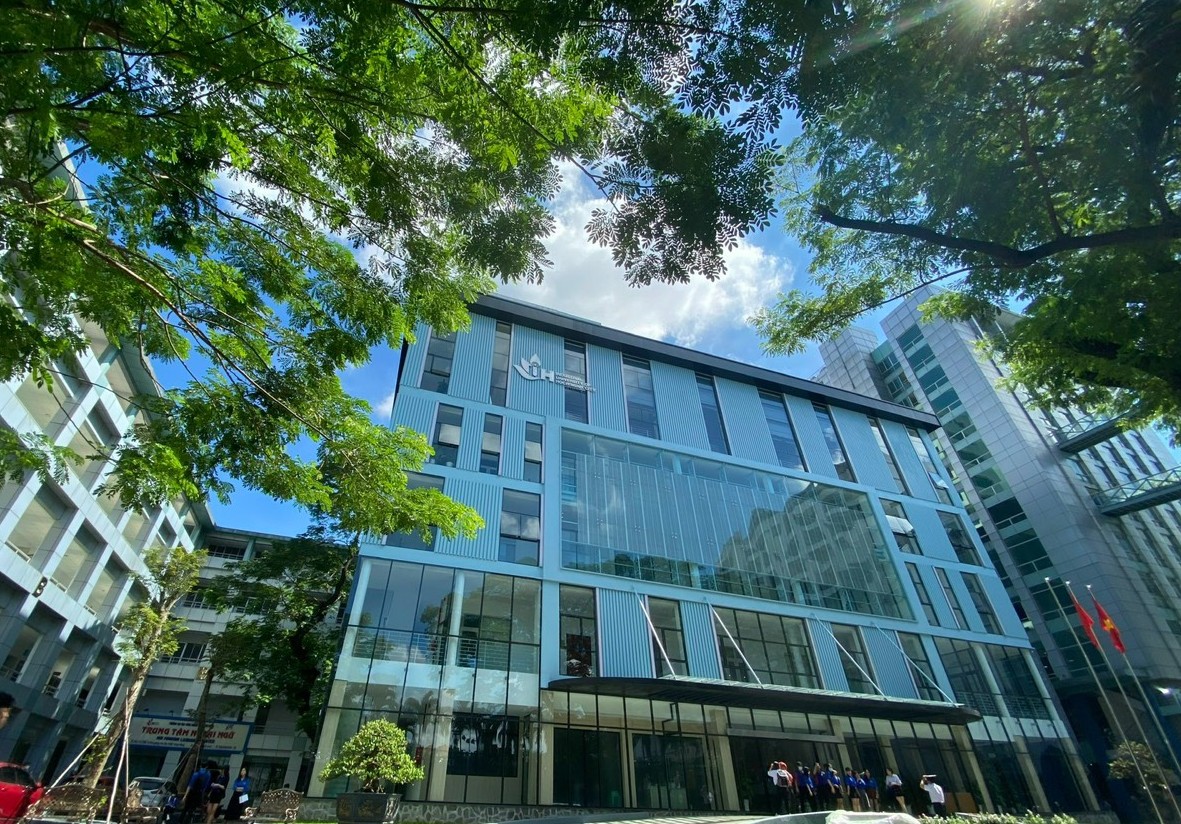
The Industrial University of Ho Chi Minh City (IUH) demonstrates a strong commitment to environmental sustainability and energy efficiency through comprehensive policies governing the design, construction, and renovation of all campus facilities.
Since 2015, the university has implemented an Energy Conservation Program that mandates the use of energy-efficient equipment, renewable energy systems, and green construction materials in every new or renovated building.
IUH strictly complies with the Vietnam National Technical Regulation on Energy Efficiency Buildings (QCVN 09:2017/BXD). This regulation serves as a foundation for all construction and renovation projects at the university, ensuring that buildings meet national standards for energy performance, insulation, ventilation, and lighting systems.
Accordingly, more than 80% of the total new floor area developed since 2018 has been built using energy-saving systems and materials, including LED lighting, inverter air-conditioning units, motion-sensor lighting, and heat-insulated glass panels.
In addition to its infrastructure, IUH promotes sustainable energy use across its laboratories and workshops by investing in specialized experimental equipment that meets energy efficiency criteria. These laboratories are designed to optimize natural lighting and ventilation while using modern, low-power devices to minimize overall electricity consumption.
To further enhance energy efficiency, the university has installed solar power systems on rooftops of several buildings, which partially supply electricity for classroom and administrative operations. IUH also encourages all units to replace outdated electrical appliances with new energy-labeled equipment to ensure consistent savings and reduced environmental impact.
Through these efforts, IUH not only reduces its carbon footprint but also nurtures a culture of sustainability and environmental awareness within its academic community. The university remains committed to maintaining a green, energy-efficient, and environmentally friendly campus as part of its long-term sustainable development strategy.