At Industrial University of Ho Chi Minh City (IUH), sustainable development is not treated as a peripheral initiative or a short-term project. Instead, it is embedded as a core administrative and academic function, supported by a clearly defined governance structure. IUH has built a comprehensive ecosystem of offices, committees, and specialized units whose primary mandate is to advance the United Nations Sustainable Development Goals (SDGs) across all areas of the university.
This integrated approach provides strong institutional evidence of IUH’s long-term commitment to sustainability.
University-Level Sustainability Committee
The most direct evidence of a dedicated sustainability governance structure at IUH is the Sustainability Committee. Operating as a cross-functional body under the direct leadership of the Board of Rectors, the committee applies a whole-institution approach to sustainable development.
Key roles and responsibilities:
- The committee is solely responsible for strategic planning, coordination, and monitoring of sustainability initiatives across teaching, research, operations, and community engagement.
- It ensures that sustainability objectives are consistently aligned with the university’s development strategy and SDG priorities.
Quality assurance and reporting support:
The committee is supported by the Office of Testing and Quality Assurance (TQA), which plays a critical role in managing IUH’s SDG-related data.
TQA oversees the university’s SDG reporting process, maintains the public SDGs section on the IUH website, and verifies sustainability indicators.
This team ensures that data submitted to international benchmarking systems—such as the Times Higher Education (THE) Impact Rankings—is accurate, transparent, and independently validated.
Office of Human Resources and Administration
Sustainability governance at IUH is further strengthened through the Office of Human Resources and Administration, which provides the personnel and operational foundation for institutional sustainability.
Human capital and EDI monitoring:
- Recruitment, promotion, and professional development processes are reviewed to support inclusive growth and long-term institutional stability.
Data-driven evidence:
- The office extracts and analyzes monthly workforce data from the university’s management software system.
- These reports provide concrete evidence of staff development trends, institutional continuity, and the gradual expansion of specialized sustainability-related roles within the university.
Academic and Research “Green Hubs”
Beyond administrative structures, IUH has embedded sustainability deeply into its academic and research architecture through specialized institutes and centers that act as “green hubs.”
Institute of Environmental Science, Engineering and Management (IESEM)
- IESEM serves as the primary driver of environmental sustainability at IUH.
- Its activities focus on applied research, policy consultation, and technology transfer in areas such as environmental management, pollution control, and climate resilience.
Office of Science Management and International Affairs
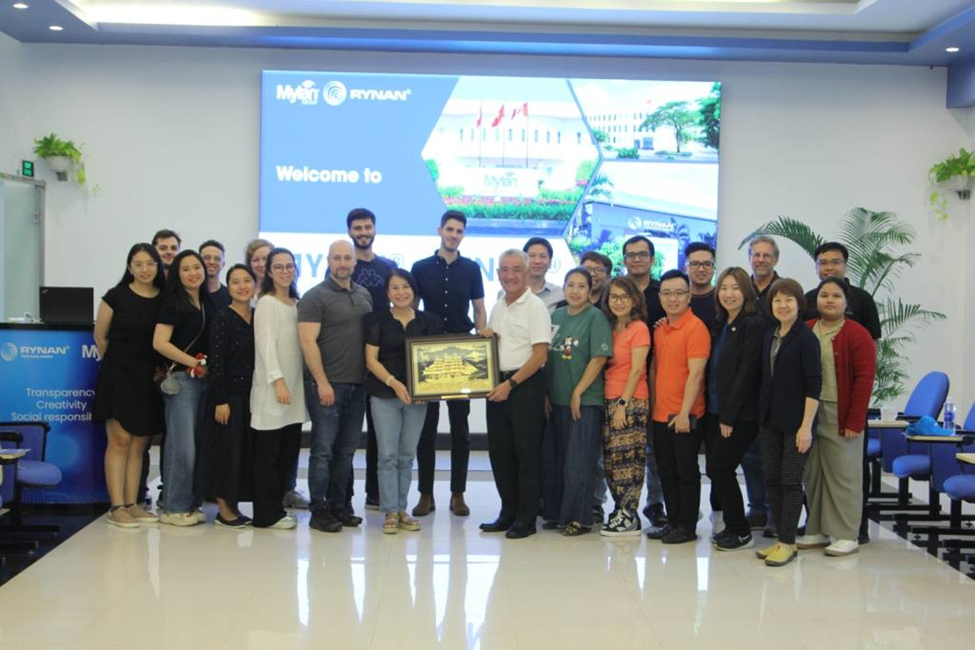
- This office coordinates international sustainability partnerships and research collaboration.
- A notable example is IUH’s participation in the Erasmus+ “GREEN EDU-SEEDS” project, which promotes sustainable agriculture, green innovation, and entrepreneurship.
- Through these partnerships, IUH strengthens its global engagement while advancing SDG-aligned research and capacity building.
Youth Union of Industrial University of Ho Chi Minh City
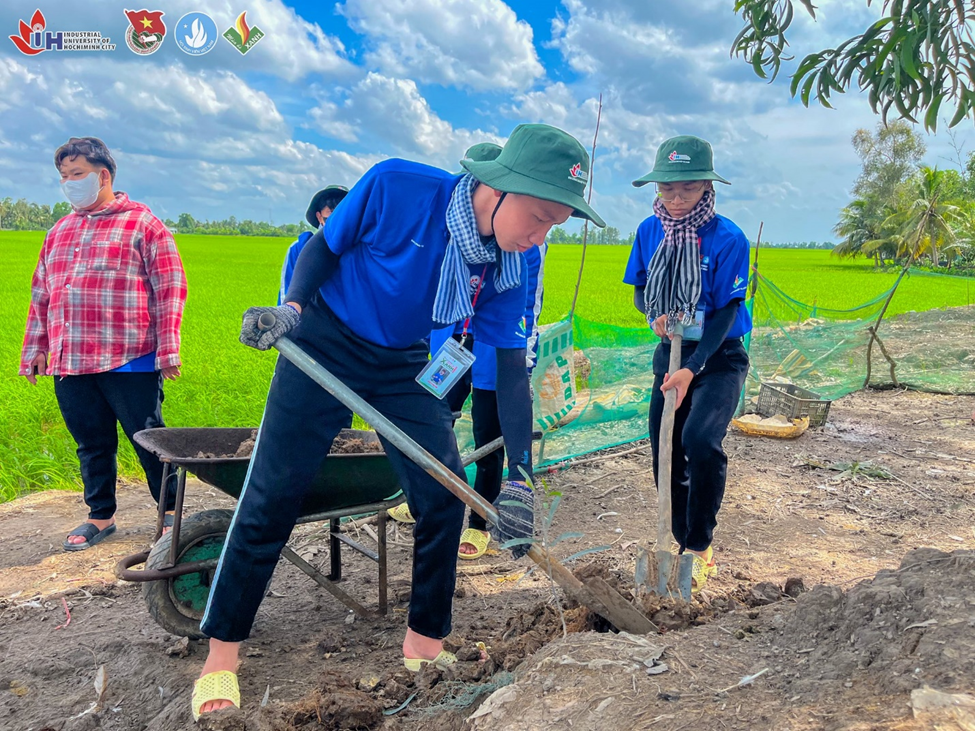
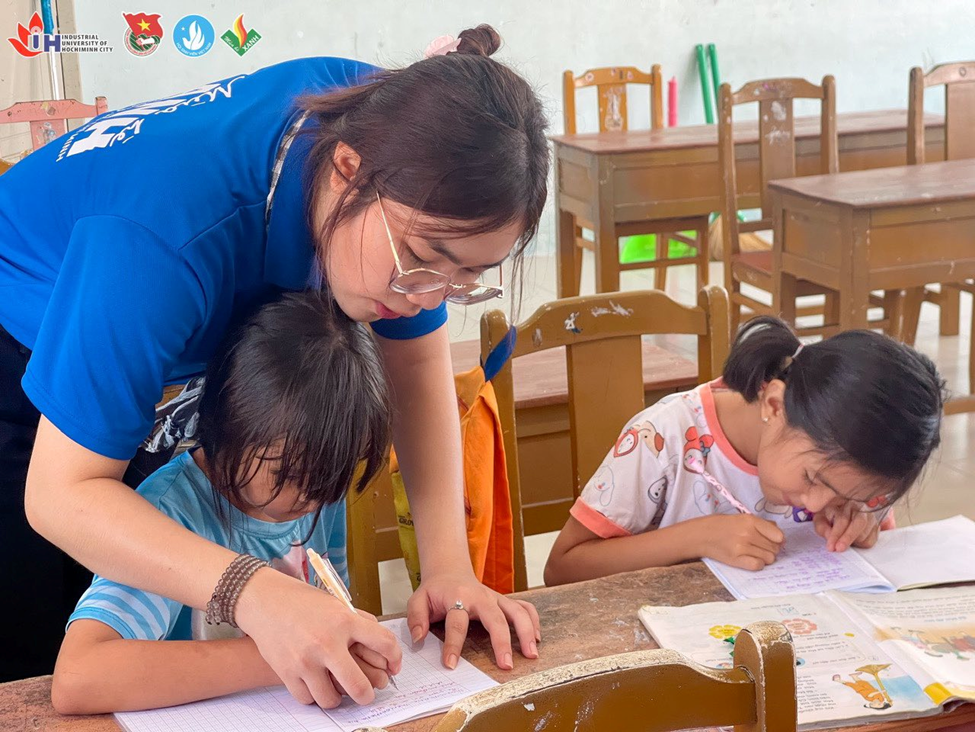
- The Center for Community Engagement translates sustainability into real-world impact through outreach and volunteer programs.
- Initiatives such as the “Green Summer Campaign” involved more than 500 student volunteers in 2025, supporting disadvantaged communities and local development projects.
- These activities directly contribute to SDG 1 (No Poverty) and SDG 11 (Sustainable Cities and Communities), while reinforcing IUH’s social responsibility mission.
In brief, IUH demonstrates a systematic and institution-wide commitment to sustainability through clearly defined governance structures, administrative support, and academic leadership. Sustainability is guided by strong leadership, clear accountability, and dedicated human resources, ensuring it is embedded as a long-term strategic priority rather than a collection of isolated initiatives. As a result, sustainability at IUH is not only taught and researched, but also actively governed and effectively implemented across the university.