
Sustainable tourism in protected natural areas requires a balance between visitor experiences, ecosystem conservation and responsible land management. Nature-based tourism can provide opportunities for environmental learning, while scientific research helps identify approaches that limit pressure on ecosystems and support long-term conservation.
Industrial University of Ho Chi Minh City (IUH), through its Institute for Environmental Science, Engineering and Management (IESEM), has undertaken research on tourism associated with mangrove conservation at the Can Gio Mangrove Biosphere Reserve.
In 2025, the University’s documented activities included a research project examining visitors’ potential participation in conservation, field investigations conducted with forest management personnel, and an international journal article exploring afforestation tourism as a form of outdoor environmental education.
These initiatives support Sustainable Development Goal 15 (SDG 15) – Life on Land by generating scientific knowledge relevant to sustainable tourism land management and the protection of mangrove ecosystems.
Activity 1: Researching Conservation-Oriented Tourism through University Project 22/2MT01
Tourism activities in protected areas need to be carefully planned to ensure that visitors can experience natural environments without compromising their ecological integrity.
IUH’s university-level research project 22/2MT01, entitled “Analysing Tourists’ Potential Participation in Conservation Activities at the Can Gio Mangrove Biosphere Reserve”, examined opportunities to connect tourism with mangrove conservation and afforestation.
The project was led by Dr. Nguyen Thi Ngoc of IESEM and focused on developing scientific insights for tourism activities that encourage visitors to engage with forest protection and restoration.
Rather than considering mangrove forests solely as destinations for sightseeing, the research explored a model in which visitors could participate in conservation-oriented experiences.
This approach is relevant to sustainable land management because tourism activities must be compatible with the ecological characteristics, conservation requirements and operational capacity of protected forest areas.
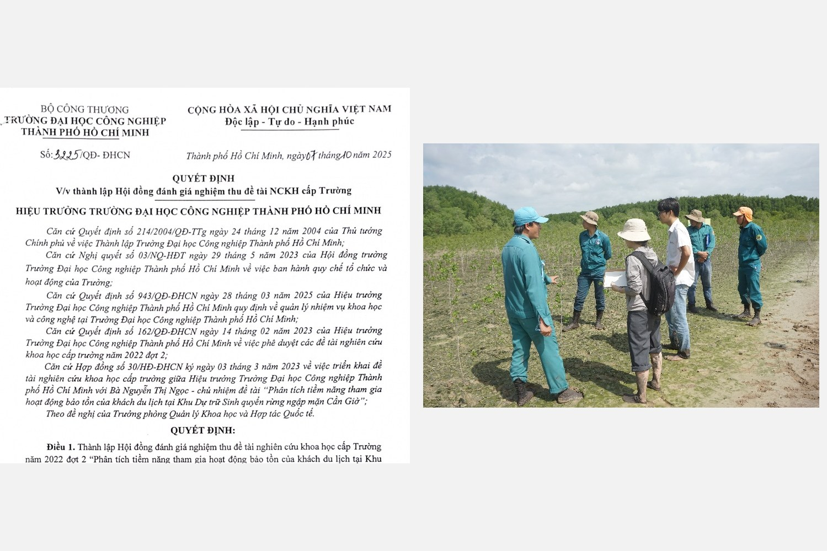
According to the supporting dossier, on 7 October 2025, the Rector of IUH issued Decision No. 3225/QĐ-ĐHCN, establishing a five-member council of internal and external experts to evaluate the research project.
The establishment of the evaluation council documents a formal stage in the University’s research management process and provides a basis for reviewing the project’s findings.
The proposed model has potential relevance to forest managers, local authorities, tourism operators and researchers interested in combining environmental education with responsible tourism development.
The project contributes scientific perspectives on how nature-based tourism can be designed to support ecosystem conservation rather than create additional environmental pressures.
However, the establishment of an evaluation council does not independently confirm that the project was formally accepted or that its proposed tourism model was implemented by local authorities.
The final evaluation record and any subsequent application of the findings should therefore be verified separately.
Through project 22/2MT01, IUH has contributed to research on conservation-oriented tourism and sustainable management of land in protected natural areas.
Evidence:
Decision No. 3225/QĐ-ĐHCN dated 07/10/2025 establishing the evaluation council for research project 22/2MT01.
The decision is reproduced in the supporting dossier; no direct public URL was provided.
Activity 2: Conducting Joint Mangrove Field Surveys and Forest-Condition Assessments
Reliable field data are essential for assessing how tourism may be integrated with conservation activities in environmentally sensitive areas.
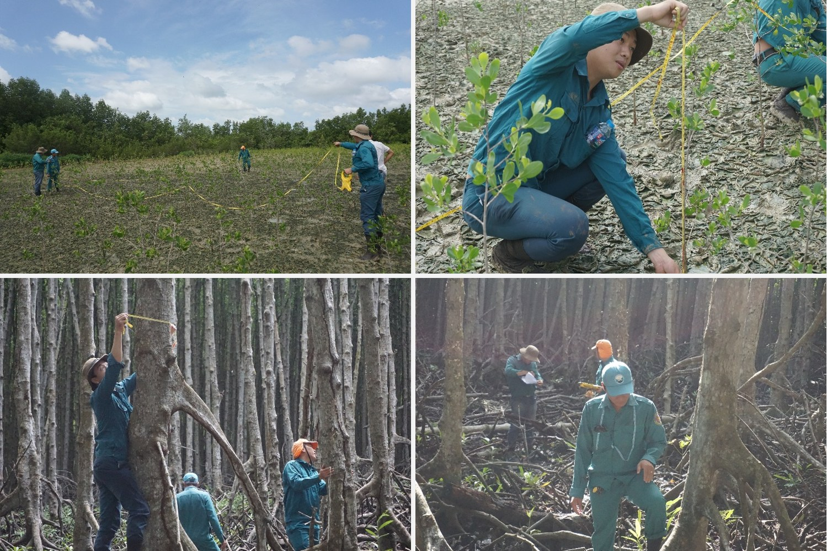
Within research project 22/2MT01, IESEM researchers conducted field investigations in the Can Gio Mangrove Biosphere Reserve with the participation of personnel from the Can Gio Protection Forest Management Board.
The activities included establishing sampling plots, measuring forest trees and documenting the condition of newly planted and mature mangrove forest stands.
These investigations provided field information relevant to forest structure, vegetation characteristics and the ecological conditions of the areas being studied.
By comparing different forest conditions, researchers could develop a better understanding of the environmental factors that should be considered when designing conservation-oriented tourism activities.
Field observations also help identify the need to protect existing vegetation and carefully manage human access to sensitive natural areas.
The cooperation between IUH researchers and forest management personnel contributed to connecting academic investigation with practical forest conservation responsibilities.
For researchers and participating students, the fieldwork offered opportunities to apply ecological observation and measurement methods in a protected natural environment.
For forest managers and tourism planners, the resulting information may provide a scientific reference for assessing potential tourism activities associated with afforestation and conservation.
The supporting documentation includes photographs of sampling activities and forest measurements involving researchers and forest management personnel.
However, the materials do not establish that the field investigation was itself a public training programme or a community workshop on sustainable tourism land management.
The project report, sampling records and any documented transfer of findings to forest managers would strengthen evidence of the activity’s practical applications.
Through these investigations, IUH supports field-based knowledge development and cooperation relevant to sustainable management of tourism activities in mangrove ecosystems.
Evidence:
Field survey photographs and sample-plot records associated with project 22/2MT01.
No direct public evidence URL was provided in the original dossier.
Activity 3: Publishing International Research on Afforestation Tourism and Outdoor Environmental Education
Nature-based tourism can provide opportunities to connect academic learning with direct experiences of ecosystem conservation.
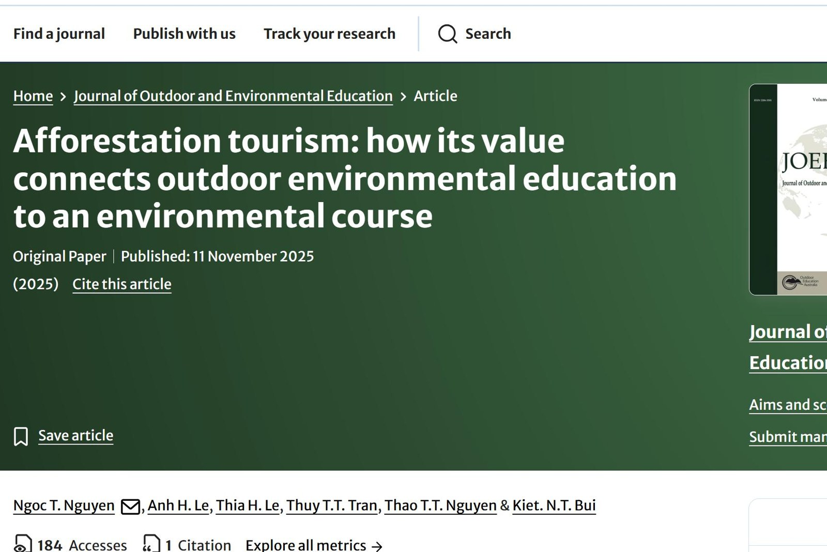
On 11 November 2025, researchers associated with IUH and the Can Gio Protection Forest Management Board published the article “Afforestation tourism: how its value connects outdoor environmental education to an environmental course” in the Journal of Outdoor and Environmental Education, published by Springer Nature.
The paper was developed within the framework of IUH research project 22/2MT01 and involved five researchers affiliated with IUH and one contributor from the Can Gio Protection Forest Management Board.
The research examined afforestation tourism as a nature-based educational experience connected with an environmental course.
Using questionnaire data from 117 university students, the study explored perceptions of mangrove conservation, field-based environmental learning and willingness to pay for afforestation tourism.
The research considered how outdoor learning experiences and environmental awareness relate to students’ evaluation of conservation-oriented tourism.
The findings identified significant relationships between willingness to pay and factors including awareness of human impacts on nature, appreciation of field-trip experiences and selected individual or household characteristics.
The study provides a scientific basis for discussing the potential of mangrove-related tourism as an educational activity and an opportunity to strengthen engagement with conservation.
It also offers information relevant to educators seeking to combine classroom instruction with field-based environmental experiences.
For tourism planners and forest managers, the research highlights the importance of understanding visitor perceptions when considering conservation-oriented tourism models.
The published study recommends further consideration of experiences combining the care of existing forests with the planting of new trees.
However, the research did not establish that all 117 respondents participated directly in an afforestation tour. It also does not prove that participation caused an increase in willingness to pay or that tourism revenue was actually generated for forest restoration.
Its demonstrated contribution is the publication of research evidence that can inform environmental education and sustainable tourism planning.
Through this international publication, IUH contributed to knowledge development linking ecological conservation, tourism and environmental education under SDG 15.
Evidence link:
https://doi.org/10.1007/s42322-025-00227-2
Results and Impact
In 2025, IUH documented three connected research activities concerning sustainable tourism and mangrove conservation at Can Gio.
First, university research project 22/2MT01 examined visitors’ potential involvement in conservation-oriented tourism. Decision No. 3225/QĐ-ĐHCN dated 7 October 2025 established the project’s evaluation council.
Second, IESEM researchers and personnel from the Can Gio Protection Forest Management Board conducted field surveys and forest measurements to support understanding of mangrove conditions.
Third, an international journal article published on 11 November 2025 presented research based on questionnaire responses from 117 students, examining afforestation tourism, outdoor environmental learning and willingness to pay.
Together, these activities generated knowledge that may support the development of tourism approaches compatible with mangrove conservation and environmental education.
Their principal contribution to SDG 15 lies in scientific assessment, research cooperation and the potential application of findings to sustainable management of land used for tourism.
However, the current documentation does not establish a completed public education programme for tourism operators or local communities, formal implementation of the proposed tourism model, or measurable conservation benefits funded through tourism. Additional outreach and implementation records are required to demonstrate these outcomes.
IUH nghiên cứu phát triển du lịch bền vững gắn với bảo tồn và trồng rừng ngập mặn tại Cần Giờ
Phát triển du lịch tại các khu vực tự nhiên được bảo vệ đòi hỏi sự cân bằng giữa nhu cầu tham quan, trải nghiệm của du khách và yêu cầu duy trì, phục hồi hệ sinh thái. Du lịch dựa vào thiên nhiên có thể trở thành phương thức giáo dục môi trường, trong khi nghiên cứu khoa học cung cấp cơ sở để xây dựng những giải pháp khai thác phù hợp với điều kiện sinh thái.
Trường Đại học Công nghiệp Thành phố Hồ Chí Minh (IUH), thông qua Viện Khoa học Công nghệ và Quản lý Môi trường (IESEM), triển khai các nghiên cứu về phát triển du lịch gắn với bảo tồn rừng tại Khu Dự trữ sinh quyển Rừng ngập mặn Cần Giờ.
Trong năm 2025, hồ sơ của Nhà trường ghi nhận ba nội dung gồm nghiên cứu tiềm năng tham gia bảo tồn của khách du lịch, khảo sát thực địa cùng đơn vị quản lý rừng và công bố quốc tế về du lịch trồng rừng kết hợp giáo dục môi trường ngoài trời.
Các hoạt động góp phần thực hiện Mục tiêu phát triển bền vững số 15 (SDG 15) – Hệ sinh thái trên cạn thông qua phát triển tri thức khoa học phục vụ quản lý đất du lịch, bảo vệ tài nguyên rừng và thúc đẩy giáo dục môi trường.
Hoạt động 1: Nghiên cứu mô hình du lịch gắn với bảo tồn tại Cần Giờ thông qua đề tài 22/2MT01
Quản lý hoạt động du lịch trong các khu bảo tồn thiên nhiên cần dựa trên đặc điểm hệ sinh thái, khả năng tiếp nhận của môi trường và yêu cầu bảo vệ tài nguyên rừng.
Đề tài nghiên cứu khoa học cấp Trường 22/2MT01, với nội dung “Phân tích tiềm năng tham gia hoạt động bảo tồn của khách du lịch tại Khu Dự trữ sinh quyển Rừng ngập mặn Cần Giờ”, được thực hiện dưới sự chủ nhiệm của TS. Nguyễn Thị Ngọc, thuộc Viện Khoa học Công nghệ và Quản lý Môi trường IUH.
Đề tài tập trung nghiên cứu những khả năng kết nối hoạt động du lịch với bảo vệ và phục hồi hệ sinh thái rừng ngập mặn.
Thay vì chỉ xem rừng ngập mặn là địa điểm tham quan, hướng nghiên cứu đặt vấn đề về sự tham gia của khách du lịch vào những trải nghiệm có liên quan đến trồng cây, chăm sóc rừng và giáo dục bảo tồn.
Cách tiếp cận này có ý nghĩa đối với quản lý đất phục vụ du lịch, bởi các hoạt động khai thác phải được tổ chức phù hợp với đặc điểm tự nhiên và các quy định bảo vệ khu vực rừng.
Theo hồ sơ tổng hợp, ngày 07/10/2025, Hiệu trưởng IUH ban hành Quyết định số 3225/QĐ-ĐHCN thành lập Hội đồng đánh giá nghiệm thu đề tài gồm năm thành viên là các chuyên gia trong và ngoài Nhà trường.
Việc thành lập Hội đồng thể hiện một bước trong quá trình quản lý, đánh giá kết quả nghiên cứu khoa học.
Kết quả nghiên cứu có khả năng cung cấp thông tin tham khảo cho Ban Quản lý Rừng phòng hộ Cần Giờ, cơ quan quản lý địa phương và các đơn vị khai thác du lịch quan tâm đến mô hình du lịch gắn với bảo tồn.
Thông qua đề tài, IUH góp phần phát triển hướng tiếp cận sử dụng tài nguyên đất tự nhiên cho hoạt động du lịch có trách nhiệm, hạn chế những tác động bất lợi đến hệ sinh thái.
Tuy nhiên, quyết định thành lập Hội đồng chưa tự chứng minh đề tài đã được nghiệm thu đạt hoặc mô hình du lịch đề xuất đã được địa phương triển khai trên thực tế.
Để xác nhận đầy đủ kết quả, cần bổ sung biên bản nghiệm thu, báo cáo tổng kết và hồ sơ sử dụng hoặc chuyển giao kết quả nghiên cứu.
Đề tài 22/2MT01 góp phần hình thành cơ sở khoa học phục vụ nghiên cứu du lịch định hướng bảo tồn và quản lý bền vững đất trong khu vực rừng ngập mặn Cần Giờ.
Nguồn minh chứng:
Quyết định số 3225/QĐ-ĐHCN ngày 07/10/2025 về việc thành lập Hội đồng đánh giá nghiệm thu đề tài 22/2MT01.
Hình ảnh Quyết định được đính kèm trong hồ sơ. Tài liệu chưa cung cấp URL công khai trực tiếp.
Hoạt động 2: Khảo sát thực địa và điều tra ô mẫu phục vụ nghiên cứu quản lý hệ sinh thái rừng ngập mặn
Dữ liệu thực địa có vai trò quan trọng trong việc đánh giá hiện trạng tài nguyên và xây dựng các định hướng khai thác du lịch phù hợp với điều kiện tự nhiên.
Trong khuôn khổ đề tài 22/2MT01, nhóm nghiên cứu IESEM phối hợp với Ban Quản lý Rừng phòng hộ Cần Giờ thực hiện khảo sát tại Khu Dự trữ sinh quyển Rừng ngập mặn Cần Giờ.
Hoạt động bao gồm thiết lập ô mẫu, đo đạc cây rừng và ghi nhận hiện trạng của những khu vực rừng mới trồng và rừng ngập mặn trưởng thành.
Các thông tin này tạo cơ sở tìm hiểu cấu trúc rừng, đặc điểm thảm thực vật và điều kiện sinh thái của những khu vực được nghiên cứu.
Việc đối chiếu hiện trạng các khu rừng có thể cung cấp dữ liệu tham khảo khi xem xét những mô hình du lịch kết hợp trồng cây, chăm sóc và bảo vệ rừng.
Đặc biệt, tại những địa điểm có yêu cầu bảo tồn cao, dữ liệu sinh thái là cơ sở cần thiết để đánh giá phạm vi hoạt động của con người và những điều kiện cần kiểm soát khi tổ chức tham quan.
Việc phối hợp giữa nhóm nghiên cứu IUH với đơn vị quản lý rừng giúp gắn kết phương pháp nghiên cứu học thuật với công tác quản lý tài nguyên thực tế.
Đối với giảng viên và sinh viên tham gia, hoạt động khảo sát tạo cơ hội thực hành những kỹ năng quan sát, đo đạc và điều tra hệ sinh thái tại khu vực tự nhiên được bảo vệ.
Đối với cơ quan quản lý rừng, các kết quả nghiên cứu có thể trở thành thông tin bổ trợ trong việc xem xét phương án sử dụng tài nguyên cho du lịch theo hướng bền vững.
Hồ sơ có hình ảnh nhóm nghiên cứu và lực lượng quản lý rừng thực hiện đo đạc, khảo sát ô mẫu tại Cần Giờ.
Tuy nhiên, những tài liệu hiện có chưa chứng minh hoạt động khảo sát là một chương trình đào tạo dành cho người dân địa phương, hướng dẫn viên hoặc doanh nghiệp du lịch.
Để nâng cao giá trị minh chứng, cần cung cấp thêm hồ sơ điều tra thực địa, báo cáo kết quả, văn bản phối hợp và tài liệu chuyển giao thông tin cho đơn vị quản lý rừng nếu có.
Thông qua khảo sát và hợp tác nghiên cứu thực địa, IUH góp phần phát triển cơ sở dữ liệu khoa học hỗ trợ quản lý tài nguyên rừng ngập mặn và định hướng phát triển du lịch bền vững.
Nguồn minh chứng:
Hình ảnh khảo sát thực địa, hồ sơ điều tra ô mẫu thuộc đề tài 22/2MT01 được đính kèm trong tài liệu.
Chưa có URL công khai trực tiếp cho hoạt động này.
Hoạt động 3: Công bố nghiên cứu quốc tế về du lịch trồng rừng kết hợp giáo dục môi trường ngoài trời
Du lịch dựa vào thiên nhiên có thể tạo cơ hội kết nối kiến thức học thuật với trải nghiệm trực tiếp về hệ sinh thái và công tác bảo tồn.
Ngày 11/11/2025, nhóm tác giả liên quan đến IUH và Ban Quản lý Rừng phòng hộ Cần Giờ công bố bài báo “Afforestation tourism: how its value connects outdoor environmental education to an environmental course” trên tạp chí quốc tế Journal of Outdoor and Environmental Education, thuộc nhà xuất bản Springer Nature.
Công bố là sản phẩm nghiên cứu thuộc đề tài 22/2MT01, với sự tham gia của năm nhà khoa học từ IUH và một chuyên gia thuộc Ban Quản lý Rừng phòng hộ Cần Giờ.
Nghiên cứu xem xét du lịch trồng rừng như một loại hình du lịch dựa vào thiên nhiên, có thể kết hợp với giáo dục môi trường trong chương trình học.
Nhóm nghiên cứu sử dụng dữ liệu khảo sát 117 sinh viên để phân tích nhận thức về tác động của con người đến tự nhiên, trải nghiệm học tập thực địa và mức sẵn lòng chi trả đối với loại hình du lịch trồng rừng.
Kết quả chỉ ra mối liên hệ giữa mức sẵn lòng chi trả với nhận thức về tác động của con người đối với thiên nhiên, đánh giá trải nghiệm thực địa và một số đặc điểm cá nhân, gia đình.
Những phát hiện này cung cấp căn cứ khoa học để xem xét khả năng kết hợp hoạt động tham quan rừng ngập mặn với giáo dục môi trường và trải nghiệm bảo tồn.
Đối với cơ sở giáo dục đại học, kết quả nghiên cứu có ý nghĩa trong thiết kế những hoạt động học tập gắn với thiên nhiên, bổ trợ cho kiến thức được giảng dạy trên lớp.
Đối với đơn vị quản lý rừng và hoạt động du lịch, nghiên cứu góp phần làm rõ vai trò của nhận thức môi trường và nhu cầu trải nghiệm của người tham gia khi xây dựng mô hình du lịch định hướng bảo tồn.
Công bố còn đề xuất tiếp tục nghiên cứu các chương trình kết hợp chăm sóc rừng hiện hữu và trồng cây mới để cải thiện trải nghiệm và tăng cường sự gắn kết với hoạt động bảo tồn.
Tuy nhiên, cần phân biệt rằng nghiên cứu khảo sát 117 sinh viên, không có nghĩa toàn bộ 117 người đều trực tiếp tham gia chương trình du lịch trồng rừng.
Đồng thời, các mối liên hệ được xác định trong mô hình nghiên cứu không tự chứng minh trải nghiệm thực địa đã gây ra sự gia tăng mức sẵn lòng chi trả, hoặc đã tạo ra doanh thu thực tế cho hoạt động phục hồi rừng.
Giá trị được xác nhận trực tiếp là kết quả nghiên cứu khoa học quốc tế, góp phần hỗ trợ hoạch định giáo dục môi trường và quản lý du lịch gắn với bảo tồn hệ sinh thái.
Thông qua công bố này, IUH đóng góp tri thức khoa học về du lịch sinh thái, bảo vệ rừng ngập mặn và quản lý bền vững đất tự nhiên theo định hướng SDG 15.
Nguồn minh chứng:
https://doi.org/10.1007/s42322-025-00227-2
Kết quả và tác động
Trong năm 2025, IUH ghi nhận ba hoạt động có liên quan đến phát triển du lịch bền vững và bảo tồn hệ sinh thái rừng ngập mặn Cần Giờ.
Thứ nhất, đề tài 22/2MT01 nghiên cứu tiềm năng tham gia bảo tồn của khách du lịch, với Quyết định số 3225/QĐ-ĐHCN ngày 07/10/2025 thành lập Hội đồng đánh giá nghiệm thu.
Thứ hai, nhóm nghiên cứu IESEM phối hợp với Ban Quản lý Rừng phòng hộ Cần Giờ thực hiện điều tra thực địa và đo đạc cây rừng nhằm cung cấp thông tin về hiện trạng hệ sinh thái phục vụ nghiên cứu.
Thứ ba, ngày 11/11/2025, bài báo quốc tế được công bố dựa trên dữ liệu khảo sát 117 sinh viên, phân tích mối liên hệ giữa giáo dục môi trường, du lịch trồng rừng và mức sẵn lòng chi trả.
Các hoạt động thể hiện sự kết hợp giữa nghiên cứu khoa học, hợp tác chuyên môn và phát triển tri thức phục vụ quản lý bền vững tài nguyên rừng cho mục đích du lịch.
Kết quả nghiên cứu có khả năng hỗ trợ việc xây dựng các chương trình du lịch phù hợp với mục tiêu bảo tồn, đồng thời cung cấp cơ sở cho hoạt động giáo dục môi trường thông qua trải nghiệm thực địa.
Những đóng góp này phù hợp với định hướng SDG 15 về bảo vệ hệ sinh thái và sử dụng bền vững đất tự nhiên.
Tuy nhiên, hồ sơ chưa chứng minh một chương trình đào tạo cộng đồng về quản lý đất phục vụ du lịch đã được triển khai, chưa xác nhận mô hình du lịch đề xuất được đưa vào vận hành và chưa có kết quả định lượng về nguồn lực du lịch được sử dụng để phục hồi rừng. Để đánh giá tác động thực tế, cần bổ sung hồ sơ chuyển giao, hoạt động đào tạo cộng đồng và thông tin ứng dụng nghiên cứu tại địa phương.


