
Protecting terrestrial ecosystems requires coordinated action among universities, local authorities, environmental management agencies and communities. Coastal vegetation, mangrove forests and other natural habitats often extend across administrative and institutional boundaries, making cooperation essential for their long-term conservation and sustainable management.
Industrial University of Ho Chi Minh City (IUH), through its Institute for Environmental Science, Engineering and Management (IESEM), has collaborated with local organizations and forest management authorities to support coastal greening, mangrove ecosystem monitoring and scientific research.
In 2025, these activities included participation in the “Greening Nghinh Phong Cape” programme, joint field investigations with the Can Gio Protection Forest Management Board and the publication of international research on afforestation tourism and environmental education.
These initiatives contribute to Sustainable Development Goal 15 (SDG 15) – Life on Land by connecting academic expertise with local environmental management and community participation in protecting shared natural ecosystems.
Activity 1: Cooperating with Local Authorities and Communities to Green Nghinh Phong Cape
The conservation of coastal landscapes requires cooperation among organizations responsible for land management, environmental protection and community development.
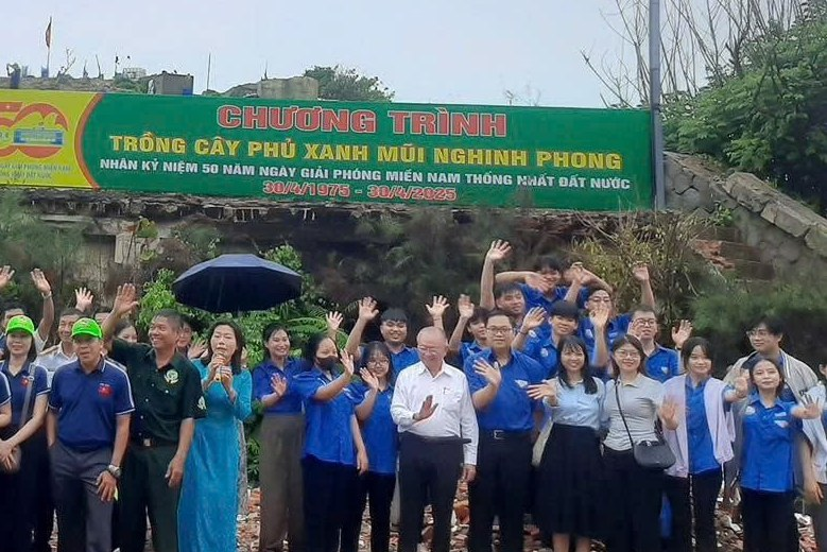
On 9 June 2025, lecturers from IUH’s Institute for Environmental Science, Engineering and Management participated in the “Greening Nghinh Phong Cape” programme in Vung Tau City.
The activity was implemented in cooperation with the Vung Tau City Border Guard Station, the Green Journey Club and local residents.
The programme focused on planting and caring for trees on areas of coastal land with limited vegetation.
According to the supporting documentation, participants planted tropical almond trees (Terminalia catappa) and cared for trees already growing at the site.
The selection of coastal tree species and the involvement of local partners were relevant to the conditions and practical requirements of the planting location.
The participation of the Border Guard Station helped connect the programme with a local public authority, while the Green Journey Club and community members contributed to the organization and implementation of environmental activities.
IUH lecturers participated directly in tree planting and care, bringing academic environmental knowledge into a community-based conservation initiative.
This cooperation illustrates how universities can contribute to local environmental programmes through practical participation rather than limiting their involvement to classroom instruction or scientific publications.
For the community and visitors, the activity supported efforts to maintain and improve vegetation in a coastal landscape.
For participating lecturers, students and volunteers, the programme provided opportunities to develop environmental awareness and experience collaborative conservation work.
Importantly, the partnership extended beyond the initial planting event.
According to the supporting dossier, on 4 April 2026, IESEM and community organizations returned to Nghinh Phong Cape to care for the planted trees and discuss measures for maintaining the vegetation.
This subsequent activity indicates continued cooperation and attention to tree maintenance after the original planting programme.
However, the available documentation does not establish the total number of trees planted, their survival rates or the area of vegetation successfully restored.
The participation of local residents and organizations is documented in the dossier, but a complete participant register and detailed assignment of long-term maintenance responsibilities have not yet been provided.
The initiative therefore demonstrates practical cooperation in coastal greening and tree maintenance, while its long-term ecological outcomes require further monitoring.
Through this programme, IUH supports community partnerships for sustainable land management and the conservation of terrestrial ecosystems under SDG 15.
Evidence links:
IESEM Facebook page identified in the supporting dossier:
facebook.com/vienmoitruong
Activity video:
Activity 2: Conducting Joint Mangrove Forest Surveys with the Can Gio Protection Forest Management Board
The sustainable management of mangrove forests requires reliable field information and cooperation between scientific researchers and organizations responsible for protecting forest resources.
Within the framework of IUH’s research project 22/2MT01, the IESEM research team cooperated with the Can Gio Protection Forest Management Board in field investigations at the Can Gio Mangrove Biosphere Reserve.
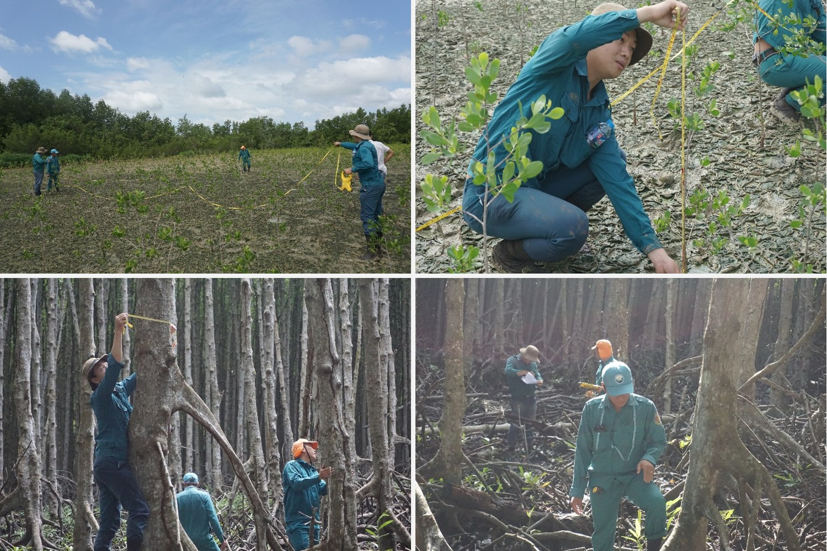
The activities involved establishing sampling plots, measuring forest trees and recording ecological conditions in newly planted and mature mangrove forest areas.
Researchers and forest management personnel participated in fieldwork to gather information relevant to forest structure and vegetation conditions.
The cooperation connected the University’s research capabilities with the practical experience and management responsibilities of the local forest authority.
For IESEM researchers, joint investigations provided access to the conditions of a protected mangrove ecosystem and opportunities to apply scientific methods in the field.
For forest management personnel, the research activities created opportunities to exchange knowledge about ecological monitoring and forest assessment.
The collection of field information may support future assessments of forest development, vegetation characteristics and conservation priorities.
The participation of forest rangers and scientific researchers also illustrates the importance of combining different forms of expertise in managing natural resources.
Photographs included in the supporting dossier show researchers and forest management personnel conducting field measurements and sampling activities.
These records provide evidence of cooperation in gathering ecological information.
However, the current documentation does not establish the precise dates of all surveys, the number of sampling plots completed under this specific activity or the existence of a jointly maintained monitoring database.
It also does not confirm that particular forest management decisions were made as a direct consequence of the fieldwork.
The original research report, survey records and cooperation agreement would strengthen the evidence of shared responsibilities and practical use of the findings.
The supporting dossier’s internal notes refer to a cooperation agreement between IESEM and the Can Gio Protection Forest Management Board dated 20 June 2023. The agreement should be verified in its original form before being cited as a formal legal or institutional basis.
Through these field investigations, IUH contributes to cooperative ecosystem monitoring and scientific knowledge relevant to the sustainable management of Can Gio’s mangrove forests.
Evidence:
Field survey photographs and sampling-plot records associated with IUH research project 22/2MT01.
No direct public evidence URL was provided in the supporting dossier.
Activity 3: Publishing Joint Research with the Can Gio Protection Forest Management Board on Afforestation Tourism
Joint scientific research can strengthen cooperation between universities and environmental management agencies by connecting academic methods with practical conservation needs.
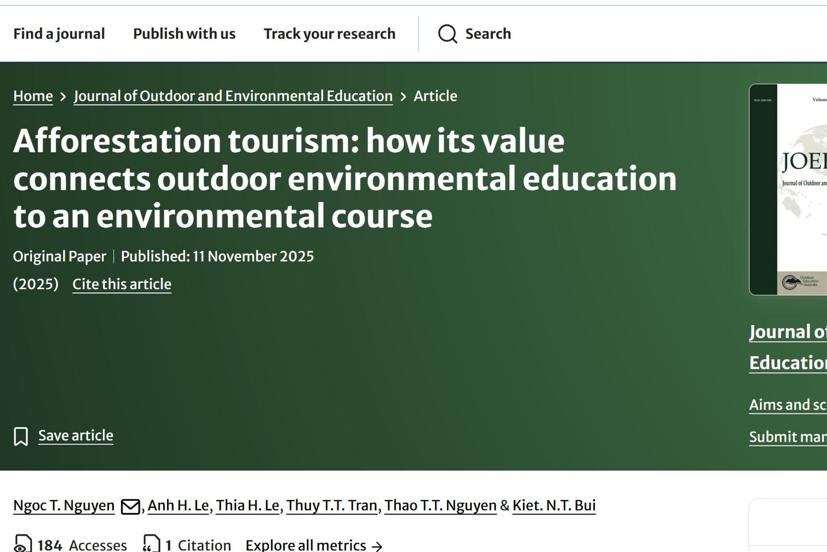
On 11 November 2025, researchers associated with IUH and the Can Gio Protection Forest Management Board published the article “Afforestation tourism: how its value connects outdoor environmental education to an environmental course” in the Journal of Outdoor and Environmental Education, published by Springer Nature.
According to the supporting documentation, the publication was an output of research project 22/2MT01 and involved five authors affiliated with IESEM–IUH and one author from the Can Gio Protection Forest Management Board.
The study investigated afforestation tourism as an approach linking nature-based experiences with environmental education and the conservation of mangrove ecosystems.
The research considered students’ perceptions of environmental impacts, outdoor learning experiences and willingness to pay for afforestation-related tourism.
The collaboration represents an academic partnership between researchers and a local authority responsible for managing a protected forest area.
Through joint authorship, the partners contributed scientific information that may be useful for discussing tourism activities compatible with mangrove conservation.
For environmental educators, the research provides information relevant to designing learning experiences associated with natural ecosystems.
For forest managers and tourism planners, it offers a scientific reference for examining visitors’ attitudes and the potential role of environmental education in conservation-oriented tourism.
The study also demonstrates a concrete research output arising from cooperation between the University and the forest management authority.
Importantly, the publication should be understood as evidence of collaborative research rather than proof that a complete afforestation tourism programme has been implemented.
The available documentation does not establish that the research led to a formally adopted tourism management policy or directly generated funding for mangrove restoration.
Nor should statistical relationships involving willingness to pay be interpreted as proof that field-trip participation caused an increase in willingness to pay.
Nevertheless, the joint publication demonstrates a substantive form of cooperation through the production and dissemination of scientific knowledge.
This collaboration may provide a foundation for subsequent projects combining environmental education, forest management and community participation.
Through international research cooperation, IUH and the Can Gio Protection Forest Management Board contribute to knowledge development relevant to maintaining shared terrestrial ecosystems under SDG 15.
Evidence link:
https://doi.org/10.1007/s42322-025-00227-2
Results and Impact
In 2025, IUH documented three complementary forms of cooperation related to the conservation and sustainable management of terrestrial ecosystems.
On 9 June 2025, IESEM participated in coastal tree planting and care at Nghinh Phong Cape alongside the Vung Tau City Border Guard Station, the Green Journey Club and local residents. The supporting dossier also records a follow-up maintenance activity on 4 April 2026.
At the Can Gio Mangrove Biosphere Reserve, IUH researchers cooperated with the Can Gio Protection Forest Management Board to conduct field surveys, establish sampling plots and collect information on mangrove forest conditions. The exact survey dates and full monitoring outputs require further verification.
On 11 November 2025, researchers affiliated with IUH and the forest management authority jointly published an international scientific article examining afforestation tourism and environmental education.
Together, these activities demonstrate cooperation between the University, public authorities and community organizations through practical conservation activities, ecological research and scientific knowledge sharing.
The principal documented outputs include joint planting and tree care, field investigation activities and a co-authored international publication.
These partnerships support SDG 15 by strengthening the connection between academic expertise and local ecosystem management. However, quantified ecological restoration outcomes, formally implemented joint management measures and long-term monitoring results remain to be verified.
IUH tăng cường hợp tác với chính quyền và cộng đồng trong bảo vệ, duy trì hệ sinh thái trên cạn
Bảo vệ và duy trì các hệ sinh thái tự nhiên đòi hỏi sự phối hợp giữa cơ sở giáo dục đại học, cơ quan quản lý nhà nước, đơn vị chuyên môn và cộng đồng địa phương. Đối với các khu vực ven biển và rừng ngập mặn, hoạt động bảo tồn không chỉ cần nguồn lực mà còn đòi hỏi kiến thức khoa học, hiểu biết thực tiễn và cơ chế phối hợp để duy trì kết quả lâu dài.
Trường Đại học Công nghiệp Thành phố Hồ Chí Minh (IUH), thông qua Viện Khoa học Công nghệ và Quản lý Môi trường (IESEM), đã phối hợp với các cơ quan địa phương và tổ chức cộng đồng thực hiện hoạt động trồng cây ven biển, khảo sát hệ sinh thái rừng ngập mặn và nghiên cứu khoa học về bảo tồn thiên nhiên.
Trong năm 2025, những hoạt động tiêu biểu được ghi nhận gồm chương trình “Trồng cây phủ xanh Mũi Nghinh Phong”, hoạt động khảo sát rừng ngập mặn Cần Giờ cùng đơn vị quản lý rừng và công bố quốc tế về du lịch trồng rừng kết hợp giáo dục môi trường.
Các hoạt động góp phần thực hiện Mục tiêu phát triển bền vững số 15 (SDG 15) – Hệ sinh thái trên cạn, thông qua tăng cường hợp tác giữa Nhà trường, chính quyền và cộng đồng trong bảo vệ, quản lý và sử dụng bền vững tài nguyên thiên nhiên.
Hoạt động 1: Phối hợp với Trạm Biên phòng TP. Vũng Tàu và cộng đồng trồng cây phủ xanh Mũi Nghinh Phong
Ngày 09/06/2025, giảng viên Viện Khoa học Công nghệ và Quản lý Môi trường IUH phối hợp với Trạm Biên phòng TP. Vũng Tàu, Câu lạc bộ Hành trình xanh và người dân địa phương tham gia chương trình “Trồng cây phủ xanh Mũi Nghinh Phong”.
Hoạt động được triển khai tại khu vực đất tự nhiên ven biển thuộc thành phố Vũng Tàu theo địa danh tại thời điểm tổ chức, hướng đến duy trì và cải thiện thảm thực vật tại những khu vực còn ít cây xanh.
Trong chương trình, các thành viên trực tiếp trồng và chăm sóc cây bàng (Terminalia catappa), kết hợp với việc chăm sóc những cây được trồng trước đó.
Sự tham gia của lực lượng Biên phòng, tổ chức cộng đồng và giảng viên IUH thể hiện mô hình hợp tác giữa cơ sở giáo dục đại học với các lực lượng tại địa phương trong triển khai hoạt động bảo vệ môi trường.
Trong đó, Trạm Biên phòng đóng vai trò đối tác địa phương, Câu lạc bộ Hành trình xanh và người dân tham gia các hoạt động cộng đồng, còn đội ngũ IESEM đóng góp thông qua sự tham gia thực tế và kiến thức chuyên môn về môi trường.
Việc kết hợp những nguồn lực này giúp tăng cường khả năng tổ chức hoạt động và tạo cơ hội duy trì quan hệ phối hợp trong công tác chăm sóc cây xanh.
Hoạt động trồng cây còn góp phần nâng cao nhận thức của người tham gia về vai trò của thảm thực vật đối với cảnh quan và hệ sinh thái ven biển.
Đáng chú ý, chương trình không dừng lại ở hoạt động trồng cây ban đầu.
Theo hồ sơ, ngày 04/04/2026, IESEM tiếp tục phối hợp với các câu lạc bộ cộng đồng trở lại Mũi Nghinh Phong để chăm sóc cây và trao đổi giải pháp duy trì mảng xanh.
Hoạt động tiếp nối thể hiện sự quan tâm đến duy trì cây sau trồng và tạo cơ hội đánh giá hiện trạng thực tế.
Tuy nhiên, tài liệu hiện chưa cung cấp số lượng cây trồng, diện tích phủ xanh, tỷ lệ cây sống hoặc kết quả đo lường thay đổi về đa dạng sinh học tại địa điểm.
Vì vậy, kết quả được chứng minh trực tiếp là việc phối hợp tổ chức trồng, chăm sóc cây và duy trì hoạt động cộng đồng, chưa đủ cơ sở xác nhận quy mô phục hồi hệ sinh thái bằng số liệu định lượng.
Thông qua chương trình, IUH góp phần gắn kết hoạt động giáo dục đại học với trách nhiệm bảo vệ thiên nhiên, thúc đẩy sự phối hợp giữa chính quyền, cộng đồng và cơ sở nghiên cứu trong duy trì hệ sinh thái trên cạn.
Nguồn minh chứng:
Trang Facebook của Viện được ghi trong hồ sơ:
facebook.com/vienmoitruong
Video hoạt động:
Hoạt động 2: Hợp tác với Ban Quản lý Rừng phòng hộ Cần Giờ trong khảo sát và theo dõi hệ sinh thái rừng ngập mặn
Rừng ngập mặn là một hệ sinh thái có vai trò quan trọng trong duy trì đa dạng sinh học, bảo vệ môi trường ven biển và cung cấp các dịch vụ sinh thái. Công tác quản lý, bảo vệ rừng cần có dữ liệu thực địa và sự phối hợp chặt chẽ giữa giới nghiên cứu với đơn vị chịu trách nhiệm quản lý tài nguyên.
Trong khuôn khổ đề tài nghiên cứu khoa học 22/2MT01, nhóm nghiên cứu thuộc IESEM – IUH phối hợp với Ban Quản lý Rừng phòng hộ Cần Giờ triển khai các hoạt động khảo sát thực địa tại Khu Dự trữ sinh quyển Rừng ngập mặn Cần Giờ.
Các hoạt động gồm thiết lập ô mẫu, đo đạc cây rừng và ghi nhận hiện trạng những khu vực rừng mới trồng, rừng ngập mặn trưởng thành.
Việc thu thập dữ liệu thực địa giúp nhóm nghiên cứu tìm hiểu cấu trúc rừng, đặc điểm sinh trưởng của cây và những điều kiện môi trường liên quan đến công tác bảo tồn.
Sự tham gia của lực lượng quản lý rừng góp phần kết nối phương pháp nghiên cứu khoa học với kiến thức thực tiễn về hiện trạng và yêu cầu bảo vệ khu vực.
Đối với Nhà trường, hoạt động tạo điều kiện để giảng viên, nhà nghiên cứu và sinh viên tiếp cận môi trường nghiên cứu thực tế, phát triển kỹ năng điều tra sinh thái và hợp tác chuyên môn.
Đối với đơn vị quản lý rừng, kết quả khảo sát có khả năng cung cấp thêm thông tin tham khảo trong việc đánh giá hiện trạng hệ sinh thái và xác định những vấn đề cần tiếp tục theo dõi.
Hồ sơ minh chứng có hình ảnh nhóm nghiên cứu IESEM và nhân sự quản lý rừng thực hiện đo đạc tại các ô mẫu.
Những hình ảnh này thể hiện sự hiện diện của hoạt động phối hợp nghiên cứu tại hiện trường.
Bên cạnh đó, phần ghi chú nội bộ đề cập đến Thỏa thuận hợp tác giữa IESEM và Ban Quản lý Rừng phòng hộ Cần Giờ ngày 20/06/2023.
Nếu được cung cấp và xác minh, đây có thể là minh chứng quan trọng về cơ sở hợp tác chính thức giữa hai bên.
Tuy nhiên, tài liệu hiện tại chưa đính kèm toàn văn thỏa thuận, chưa xác định ngày cụ thể của các đợt khảo sát và chưa cung cấp đầy đủ sản phẩm dữ liệu được hai đơn vị sử dụng chung.
Đồng thời, việc thu thập dữ liệu nghiên cứu chưa tự chứng minh đã có các quyết định quản lý hoặc biện pháp phục hồi rừng được ban hành từ kết quả khảo sát.
Vì vậy, giá trị có căn cứ của hoạt động là sự hợp tác trong điều tra thực địa và phát triển thông tin khoa học liên quan đến quản lý hệ sinh thái rừng ngập mặn.
Thông qua hợp tác với Ban Quản lý Rừng phòng hộ Cần Giờ, IUH góp phần tăng cường mối liên kết giữa nghiên cứu khoa học và quản lý tài nguyên thiên nhiên theo định hướng SDG 15.
Nguồn minh chứng:
Hồ sơ hình ảnh khảo sát thực địa và điều tra ô mẫu của đề tài 22/2MT01.
Thỏa thuận hợp tác IESEM – Ban Quản lý Rừng phòng hộ Cần Giờ ngày 20/06/2023 được ghi nhận trong phần lưu ý nội bộ, cần bổ sung bản gốc.
Chưa có URL công khai trực tiếp cho hoạt động này.
Hoạt động 3: IUH và Ban Quản lý Rừng phòng hộ Cần Giờ đồng công bố nghiên cứu quốc tế về du lịch trồng rừng
Công bố khoa học chung giữa trường đại học và cơ quan quản lý tài nguyên là một hình thức hợp tác giúp kết nối tri thức học thuật với thực tiễn bảo vệ hệ sinh thái.
Ngày 11/11/2025, nhóm nghiên cứu có sự tham gia của IUH và Ban Quản lý Rừng phòng hộ Cần Giờ công bố bài báo “Afforestation tourism: how its value connects outdoor environmental education to an environmental course” trên tạp chí Journal of Outdoor and Environmental Education, thuộc nhà xuất bản Springer Nature.
Theo hồ sơ, công bố là sản phẩm nghiên cứu của đề tài 22/2MT01, với sự tham gia của 5 tác giả thuộc IESEM – IUH và 1 tác giả thuộc Ban Quản lý Rừng phòng hộ Cần Giờ.
Nghiên cứu xem xét du lịch trồng rừng như một hướng tiếp cận kết hợp trải nghiệm thiên nhiên, giáo dục môi trường và bảo tồn hệ sinh thái rừng ngập mặn.
Nội dung tập trung vào nhận thức về tác động của con người đối với thiên nhiên, trải nghiệm học tập ngoài trời và mức sẵn lòng chi trả đối với hoạt động du lịch gắn với trồng rừng.
Việc đồng công bố nghiên cứu thể hiện sự phối hợp giữa cơ sở giáo dục đại học và đơn vị trực tiếp quản lý rừng trong phát triển tri thức khoa học.
Đối với IUH, hoạt động góp phần phát huy năng lực nghiên cứu, đào tạo và giáo dục môi trường thông qua những vấn đề thực tiễn tại địa phương.
Đối với Ban Quản lý Rừng phòng hộ Cần Giờ, kết quả nghiên cứu có thể trở thành nguồn thông tin tham khảo khi xem xét những hoạt động giáo dục, tham quan và bảo tồn phù hợp với điều kiện hệ sinh thái.
Đối với lĩnh vực du lịch bền vững, nghiên cứu góp phần làm rõ vai trò của nhận thức môi trường và trải nghiệm thiên nhiên trong đánh giá những mô hình du lịch định hướng bảo tồn.
Đây là một sản phẩm hợp tác khoa học có thể kiểm chứng thông qua DOI và thông tin tác giả trên công bố quốc tế.
Tuy nhiên, việc công bố bài báo chưa đồng nghĩa với việc mô hình du lịch trồng rừng đã được triển khai chính thức hoặc tạo ra nguồn kinh phí thực tế phục vụ trồng, chăm sóc rừng.
Đồng thời, các kết quả liên quan đến mức sẵn lòng chi trả không nên được diễn giải thành quan hệ nhân quả nếu phương pháp nghiên cứu không chứng minh được điều đó.
Kết quả có căn cứ trực tiếp là việc hai đơn vị phối hợp xây dựng, công bố nghiên cứu khoa học và cung cấp thông tin phục vụ thảo luận về bảo tồn, giáo dục môi trường và du lịch gắn với rừng ngập mặn.
Thông qua hoạt động đồng tác giả, IUH và Ban Quản lý Rừng phòng hộ Cần Giờ đóng góp tri thức khoa học cho quản lý, sử dụng bền vững hệ sinh thái trên cạn theo định hướng SDG 15.
Nguồn minh chứng:
https://doi.org/10.1007/s42322-025-00227-2
Kết quả và tác động
Trong năm 2025, Trường Đại học Công nghiệp Thành phố Hồ Chí Minh ghi nhận những hoạt động hợp tác với cơ quan quản lý địa phương và tổ chức cộng đồng trong bảo vệ hệ sinh thái trên cạn.
Ngày 09/06/2025, giảng viên Viện Khoa học Công nghệ và Quản lý Môi trường phối hợp với Trạm Biên phòng TP. Vũng Tàu, Câu lạc bộ Hành trình xanh và người dân tham gia trồng, chăm sóc cây xanh tại Mũi Nghinh Phong. Hoạt động chăm sóc tiếp tục được hồ sơ ghi nhận vào ngày 04/04/2026, thể hiện sự quan tâm đến duy trì kết quả sau trồng.
Tại rừng ngập mặn Cần Giờ, nhóm nghiên cứu IUH phối hợp với Ban Quản lý Rừng phòng hộ Cần Giờ thực hiện khảo sát, điều tra ô mẫu và thu thập thông tin về hiện trạng rừng. Hồ sơ hiện có chưa xác định đầy đủ thời điểm từng đợt khảo sát và sản phẩm dữ liệu chính thức được chia sẻ.
Ngày 11/11/2025, các nhà khoa học thuộc IUH và Ban Quản lý Rừng phòng hộ Cần Giờ đồng công bố bài báo quốc tế về du lịch trồng rừng kết hợp giáo dục môi trường, tạo ra một sản phẩm nghiên cứu chung có khả năng kiểm chứng.
Ba hoạt động thể hiện những hình thức hợp tác bổ trợ nhau: phối hợp thực hiện hoạt động bảo vệ môi trường tại cộng đồng, hợp tác điều tra hệ sinh thái và đồng công bố nghiên cứu khoa học.
Những kết quả này góp phần tăng cường kết nối giữa năng lực chuyên môn của Nhà trường với kinh nghiệm, trách nhiệm quản lý của các cơ quan và tổ chức địa phương. Các hoạt động còn hỗ trợ nâng cao nhận thức về bảo vệ thảm thực vật, phát triển thông tin khoa học và thúc đẩy hợp tác trong quản lý tài nguyên rừng.
Các nội dung phù hợp với SDG 15 thông qua phát triển quan hệ đối tác trong bảo vệ, duy trì hệ sinh thái trên cạn. Tuy nhiên, hồ sơ chưa đủ dữ liệu định lượng về diện tích được phục hồi, tỷ lệ cây sống, hiệu quả bảo tồn dài hạn hoặc những quyết định quản lý đã áp dụng kết quả nghiên cứu.
Để chứng minh tác động bền vững của hợp tác, IUH cần tiếp tục hoàn thiện hồ sơ phối hợp chính thức, dữ liệu thực địa và kết quả theo dõi sau triển khai.


